
10 Utility Room Organisation Ideas for Small Spaces
A utility room may be one of the hardest-working spaces in the home, but it is often one of the smallest too. Between laundry, cleaning products, pet supplies, recycling and everyday household essentials, these compact rooms can quickly become cluttered and difficult to maintain.
At Homefulness, we often find that when a utility room functions well, the entire home feels calmer. This is because the space quietly supports so many daily routines in the background, from washing clothes to storing cleaning supplies and managing household overflow.
The good news is that even the smallest utility room can feel organised, practical and beautifully functional with the right systems in place.
In this guide, we are sharing 10 utility room organisation ideas for small spaces, including clever utility room storage ideas, laundry zones, washing machine storage solutions and practical ways to make the room easier to use every day.
Why Utility Rooms Become Cluttered So Quickly
Utility rooms often become cluttered because they are expected to hold a wide range of practical items, but are rarely designed with enough storage from the start.
They can easily become a catch-all for:
laundry products
cleaning supplies
shoes and coats
pet items
recycling
spare household essentials
vacuum cleaners, mops and household tools
Without clear systems, these items quickly spread across worktops, shelves and floors. The room may still contain everything you need, but it becomes harder to find, use and put away.
The goal of a well-organised utility room is not perfection. It is functionality. A good system should support everyday life smoothly, reduce visual overwhelm and feel easy to maintain long-term.
Before You Start: What Does Your Utility Room Need to Do?
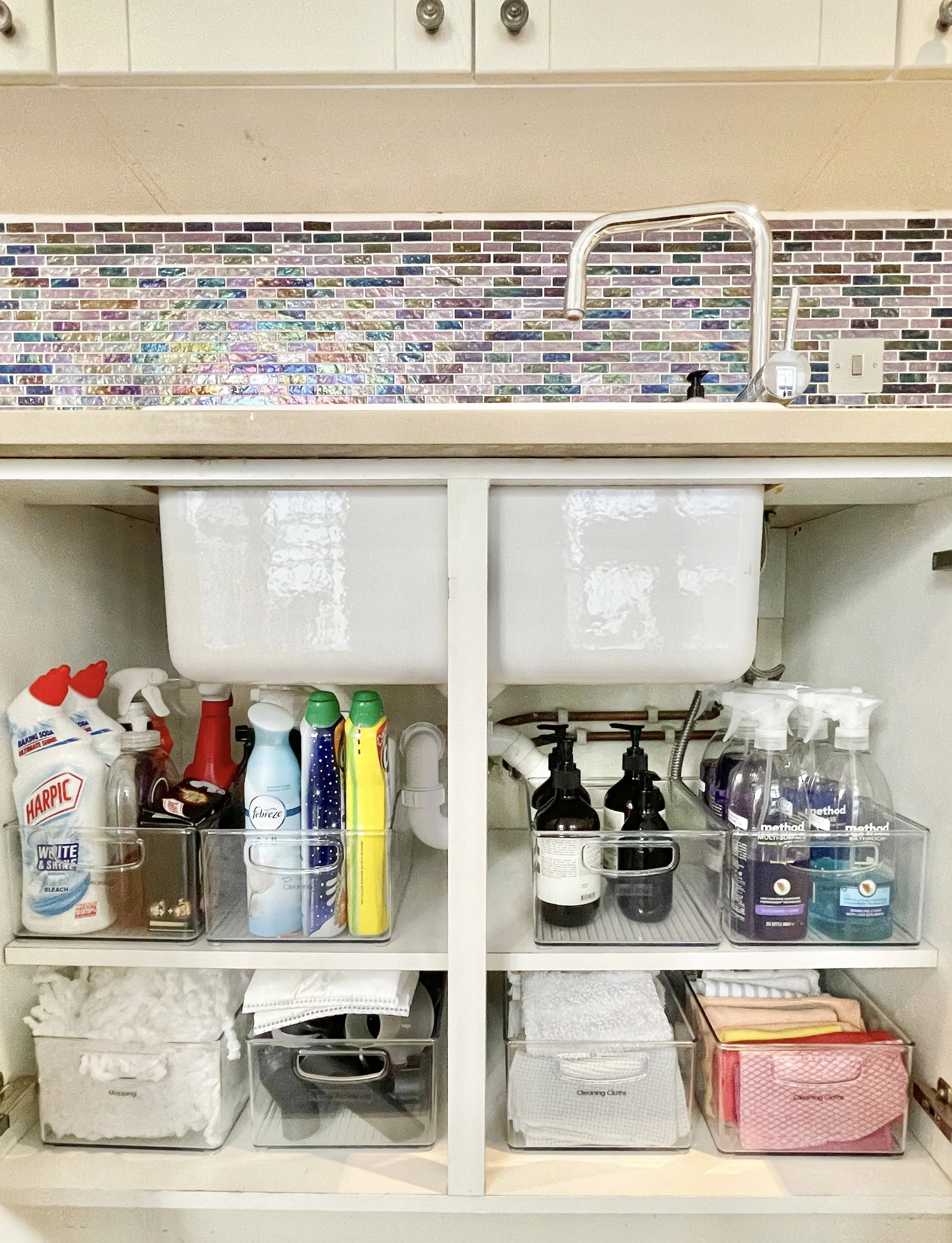
Before buying storage or rearranging shelves, take a moment to decide what the space genuinely needs to support.
Ask yourself:
Do you mainly use the room for laundry?
Does it also need to store cleaning products?
Are pet supplies, coats, shoes or recycling kept here?
Do children or pets have access to the room?
Which items do you use daily, weekly or only occasionally?
What currently makes the room difficult to manage?
This step helps you avoid creating a system that looks organised but does not suit your routines. A thoughtful utility room should be arranged around how you live, not just how the space appears.
1. Create Clear Zones for Different Tasks
One of the best small utility room ideas is to divide the room into simple functional zones.
For example, you might create a:
laundry zone
cleaning supplies zone
pet care zone
shoe and outdoor storage zone
recycling area
household overflow section
This immediately makes the space feel more intentional and easier to navigate. When every category has a clear place, clutter is far less likely to spread across the room.
Even in a compact utility room, zoning creates structure. A single shelf, basket or cupboard can become its own zone if it has a clear purpose.
2. Use Vertical Space Wherever Possible
In small utility rooms, wall space is valuable. Using the height of the room can increase storage without taking up additional floor space.
Good utility room storage ideas include:
floating shelves above the washing machine
slim wall cabinets
hooks for bags, coats or aprons
hanging rails for cleaning tools
pegboards for brushes and small items
over-door organisers
vertical basket storage
Vertical storage works especially well for items you use regularly but do not want sitting on worktops. It helps smaller spaces feel more open, while keeping useful items within easy reach.
For a calmer finish, avoid filling every visible shelf. Leave a little breathing room where possible, so the room feels considered rather than crowded.
3. Improve the Area Around the Washing Machine
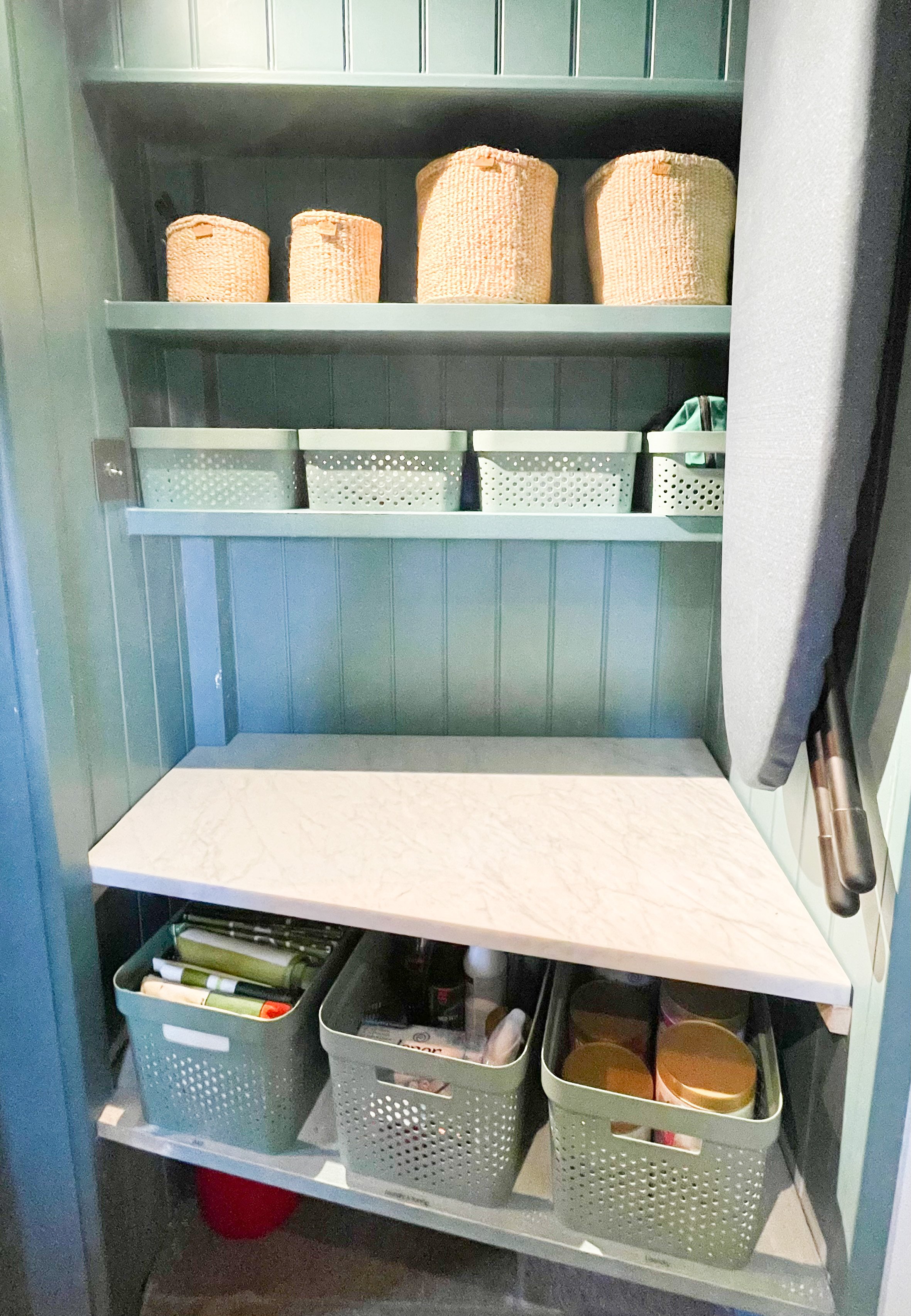
The area around the washing machine is often underused, especially in smaller homes. Thoughtful washing machine storage solutions can make the laundry process much easier.
Useful options include:
a slim rolling cart beside the machine
shelving above appliances
a countertop over front-loading machines
pull-out laundry baskets
detergent drawers or containers
a small tray for daily-use products
Adding a countertop over side-by-side appliances can be particularly effective. It instantly creates a surface for folding, sorting and treating clothes, without needing more floor space.
If space is very limited, keep only the products you use most often beside the machine. Bulk refills and occasional items can be stored higher up or elsewhere.
4. Decant Laundry and Cleaning Products Thoughtfully
Decanting can help create visual calm, but it should be practical as well as attractive.
Large bottles, half-empty packets and mismatched packaging often make utility rooms feel more chaotic than they are.
Using labelled jars, refill bottles or containers can:
improve visibility
reduce visual clutter
prevent duplicate purchases
make products easier to access
create a more consistent look
This approach works well for:
laundry powder
detergent
pegs
dishwasher tablets
cloths and sponges
stain-removal products
However, always keep safety in mind. Some products need original labels, instructions or hazard information, especially if they contain chemicals. If you do decant, label clearly and avoid storing anything in a way that could be mistaken for food or drink.
5. Prioritise Safe Cleaning Cupboard Organisation
Good cleaning cupboard organisation should balance ease of access with safety.
Cleaning products should be:
easy for adults to reach
safely stored away from children and pets
grouped by category
clearly labelled
simple to put back after use
A practical system might include:
sprays together
cloths and gloves together
laundry products separate from general cleaning items
refills stored behind or above daily-use products
potentially harmful items on higher shelves or in closed cupboards
Lidded bins, pull-out drawers and high shelving can be useful for keeping products secure while still easy to manage. If children or pets use the space, closed storage is often the safest and calmest option.
6. Add Closed Storage to Reduce Visual Noise
Open shelving can look beautiful, but too much visible storage in a small utility room often increases visual overwhelm.
Closed cupboards, baskets and labelled bins help conceal everyday essentials while keeping the room functional. This is especially helpful for storing:
spare toiletries
lightbulbs
pet food
cleaning refills
reusable bags
batteries
shoe care products
household extras
The goal is not to hide everything. It is to reduce visual noise, so the room feels easier on the eye and simpler to reset.
If you use open shelves, try grouping items in matching baskets or containers. This keeps the look calm while still allowing quick access.
7. Make Laundry Easier to Maintain
The most effective laundry room organisation UK homes can benefit from is usually simple, practical and easy to repeat.
Complicated systems rarely last. Instead, focus on making each step of the laundry process smoother.
A useful laundry setup might include:
one basket for lights and one for darks
a small basket for delicate items
easy access to detergent and stain remover
a clear folding surface
a place for air-drying items
hooks or rails for items that need hanging
a small container for lost socks or pocket items
When the process feels smoother, laundry becomes less mentally draining. Small improvements can make a noticeable difference, especially in a room used several times a day.
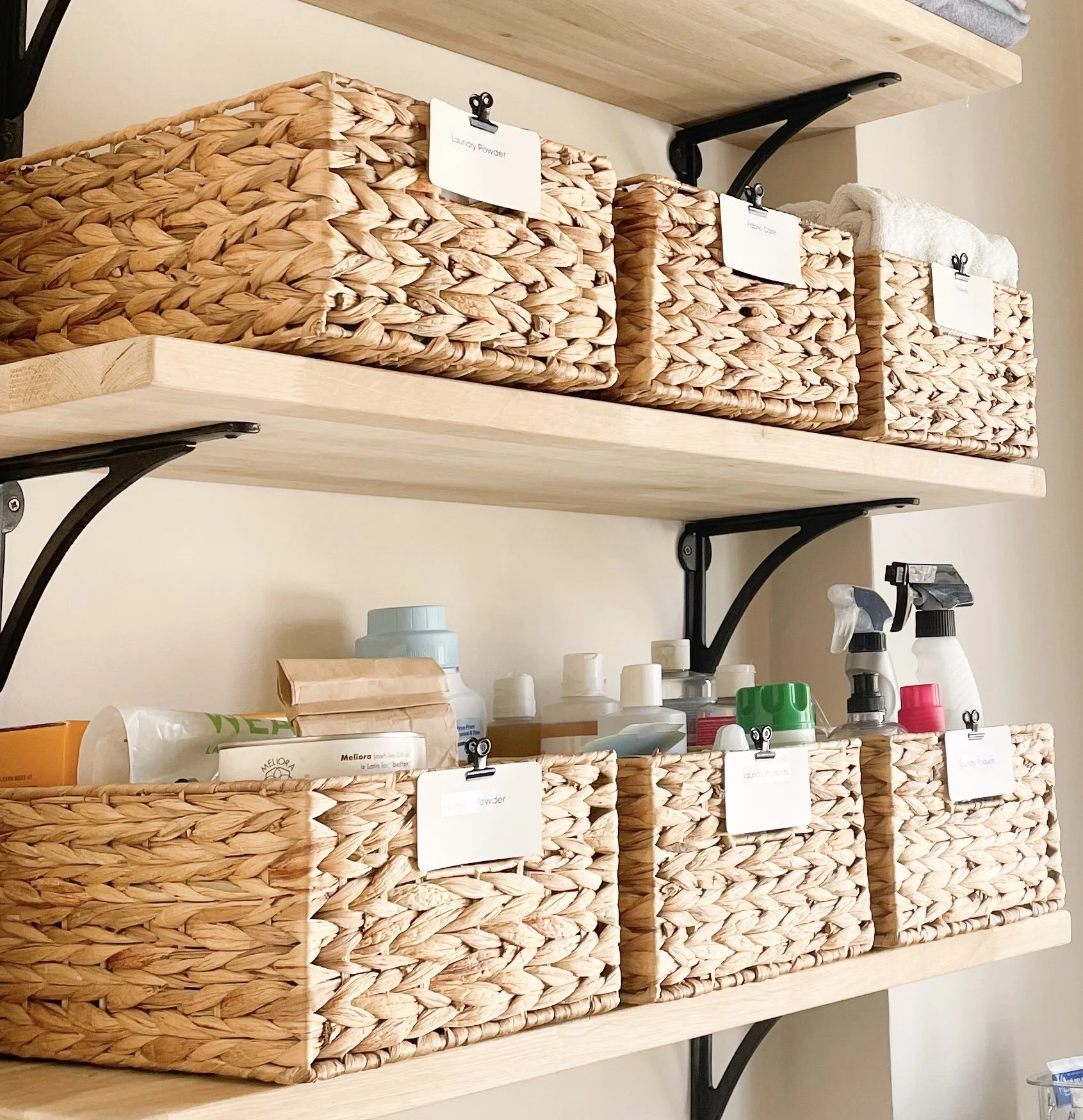
8. Use Baskets to Contain Categories
Baskets are one of the easiest ways to create order quickly in a small utility room. They prevent loose items spreading across shelves and make cupboards much easier to maintain.
Use baskets for:
cleaning cloths
pet accessories
spare toiletries
reusable shopping bags
batteries and household items
shoe care products
laundry extras
Labelling baskets helps everyone in the household understand where things belong. This is particularly useful in shared family spaces, where the success of the system depends on more than one person maintaining it.
Choose baskets that suit the purpose. Washable plastic or metal baskets can work well for cleaning supplies, while softer woven baskets may be better for lighter household items.
9. Think About How the Room Feels, Not Just How It Looks
A functional utility room should support your routines emotionally as well as practically.
This may sound surprising, but cluttered utility spaces often create low-level stress because they are associated with unfinished chores and constant visual noise. A calmer room can make everyday tasks feel lighter.
Small changes can help, such as:
improving lighting
choosing neutral containers
keeping shelves less crowded
using calm colours
adding simple labels
removing items that do not belong
Even practical rooms deserve thoughtful design. A utility room does not need to feel purely functional or forgotten. With the right organisation, it can feel quietly polished and intentional.
10. Do Not Try to Store Everything There
One of the biggest mistakes people make in small utility rooms is trying to fit too much into them.
Not every household item needs to live in this space. Before organising, declutter honestly and remove:
expired products
duplicate cleaning supplies
unused items
broken tools
empty packaging
products you no longer like or use
Then reassess whether every category truly belongs in the utility room.
Sometimes the most effective organising solution is simply storing less. A small utility room works best when it supports essential routines, rather than becoming a storage room for anything without another home.
What Should Go in a Utility Room?
A utility room should hold practical household items that support daily routines. This usually includes laundry supplies, cleaning products, recycling, pet care items, ironing equipment, household tools and selected outdoor items such as shoes or coats.
The exact categories depend on your home and lifestyle. In smaller homes, it is especially important to be selective. The room should feel useful, not overcrowded.
If an item is rarely used, difficult to access or unrelated to the tasks you do in the utility room, it may work better elsewhere.
How Do I Organise a Small Utility Room?
To organise a small utility room, start by decluttering, then divide the space into clear zones. Use vertical storage, closed baskets and simple labels to make each category easy to find and maintain.
A good process is:
Remove everything that does not belong.
Group similar items together.
Decide which items need daily access.
Use walls, shelves and cupboards to maximise space.
Label baskets or containers clearly.
Keep surfaces as clear as possible.
Review the system after a few weeks and adjust if needed.
You do not need endless storage or a large room to create calm. What matters most is creating thoughtful systems that work for the way you actually live.
FAQs About Utility Room Organisation
How Do I Store Cleaning Products Safely?
Store cleaning products in a closed cupboard, high shelf or lidded container, especially if children or pets are in the home. Keep products clearly labelled and avoid mixing different chemicals or decanting anything without noting the contents and safety information.
How Do I Make a Utility Room Functional?
A functional utility room should be arranged around the tasks you do most often. Keep everyday items easy to reach, use zones for different categories and avoid storing too many unrelated household items in the space.
What Is the Best Storage for a Small Utility Room?
The best storage for a small utility room usually combines vertical shelving, closed cupboards, hooks and labelled baskets. Slim rolling carts and over-door organisers can also work well where floor space is limited.
Should I Use Labels in a Utility Room?
Yes, labels can make a utility room much easier to maintain. They are especially useful for baskets, drawers and shared household spaces because they make it clear where items belong.
When Is It Worth Getting Help with a Utility Room?
It may be worth getting support if the room feels difficult to maintain, storage is limited or the space needs to work harder for your household routines. Professional organisation can be particularly helpful after a move, renovation or wider rethink of how the home functions.
Final Thoughts
A well-organised utility room has a ripple effect across the entire home. It simplifies routines, reduces visual overwhelm and helps everyday tasks feel easier to manage.
The best utility room organisation ideas are rarely about perfection or expensive renovations. They are about creating systems that quietly support you every day.
At Homefulness, we help clients create thoughtful, beautifully organised homes that feel calm, functional and easy to maintain, including the practical spaces that often get overlooked.
If you would like support creating a utility room that works beautifully for your home and routines, Homefulness can help you plan a calm, practical system tailored to the way you live.
Because even the hardest-working rooms in the home deserve to feel intentional.

Jessica has been part of the Homefulness team since 2019, first as a professional organiser and now leading business development and social media. With a background in merchandising and retail management, she pairs a sharp eye for styling with practical, systems-led organisation, and has helped clients across London and the South East create calmer, clutter-free homes.
Meet the Homefulness team →Found this useful? Add Homefulness as a preferred source on Google.