
Rethinking the Junk Drawer: Organise Everyday Chaos Easily
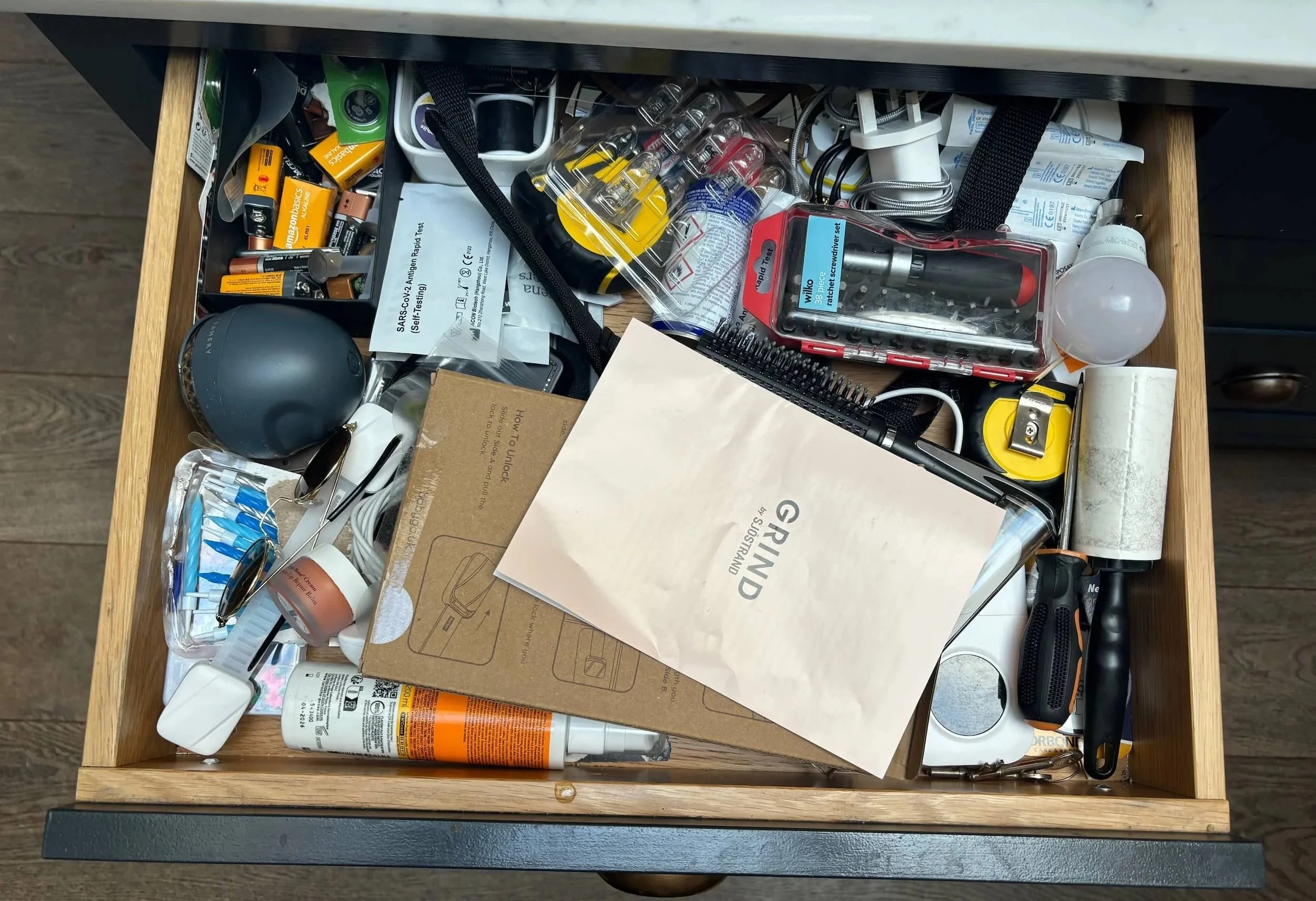
Every home has one. That one drawer where batteries, receipts, headphones, pens, rubber bands, and ‘I’ll deal with this later’ items gather in a quietly chaotic heap. A junk drawer is simply a catchall drawer for everyday bits and bobs that haven’t found a proper home yet. We lovingly (or reluctantly) call it the junk drawer - but it doesn’t have to stay junky forever.
With a few simple shifts, you can transform this little hotspot of daily clutter into a beautifully functional everyday essentials station that works with your life, not against it. And yes - you absolutely can make junk drawers look nice.
Below, you’ll find 10 practical, realistic, game-changing tips for organising everyday chaos with ease - including ideas for what should go in a junk drawer, how to stop it from overflowing, and how to create your very own command centre drawer. These tips work in kitchens, entryways, utility rooms, and anywhere those tricky ‘bits and bobs’ tend to land.
Let’s organise the drawer you open (and close) the fastest.
1. Start with a Full Empty-Out
Before you learn how to tidy a junk drawer, you need to see exactly what’s inside. Take everything out, give the drawer a quick clean, and sort the contents into simple piles: keep, relocate, recycle, or bin.
You’ll almost instantly discover:
Duplicates
Items that belong elsewhere
Random objects that drifted there over time
This step alone often removes 30-40% of the clutter.
2. Redefine the Drawer’s Purpose
A junk drawer becomes junk when it has no job. Instead, give it a new identity: an Everyday Essentials Station.
Ask yourself:
What do we reach for every day?
What items always end up here?
Common essentials include:
Tape
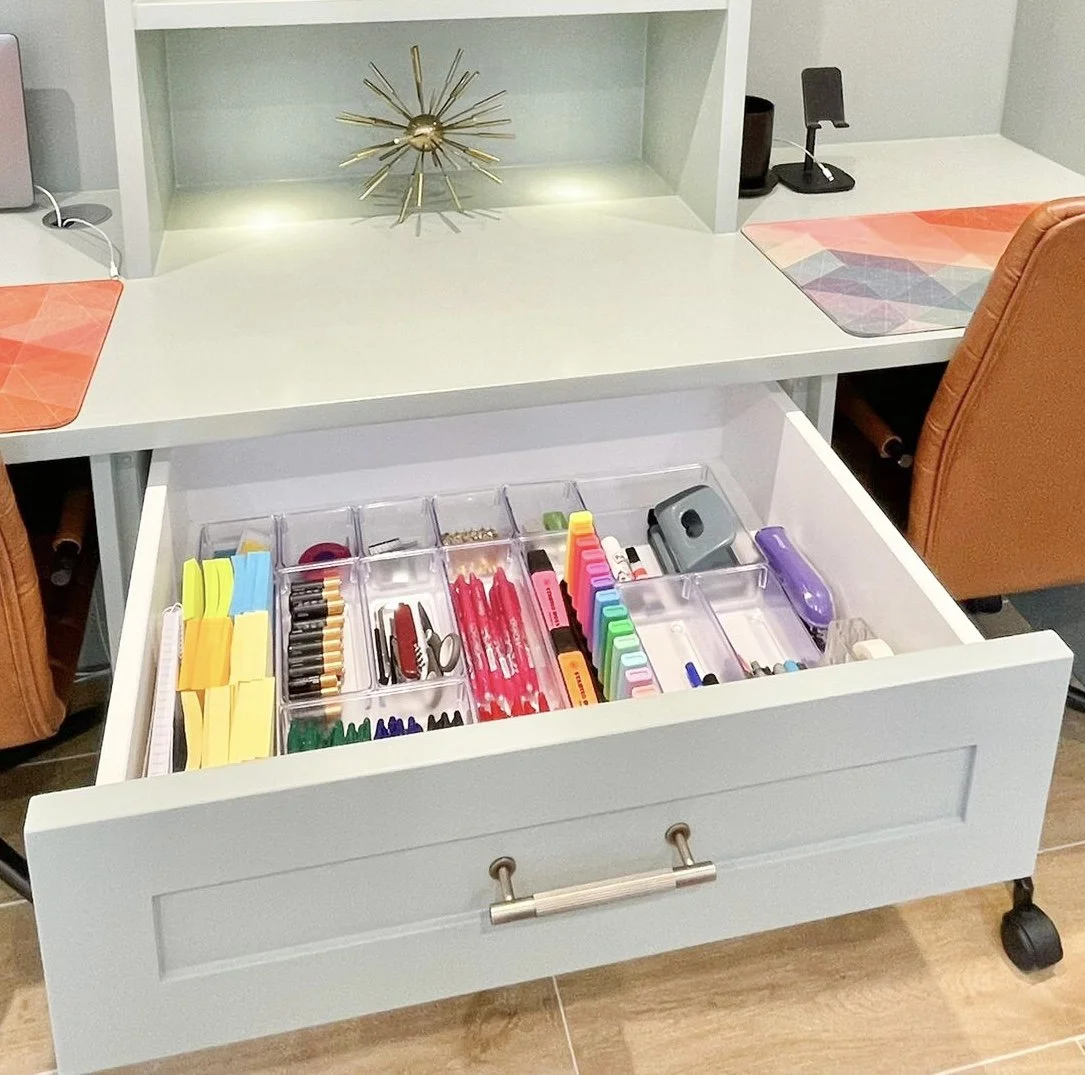
Pens + notepads
Scissors
Chargers
Batteries
Plasters
Keys
Small tools
This becomes your new baseline for what should go in the drawer - and everything else can find a more intentional home.
Need help creating simple, everyday systems like this? Explore our decluttering services to see how we can support your home routines.
3. Choose the Right Containers (Your Future Self Will Thank You)
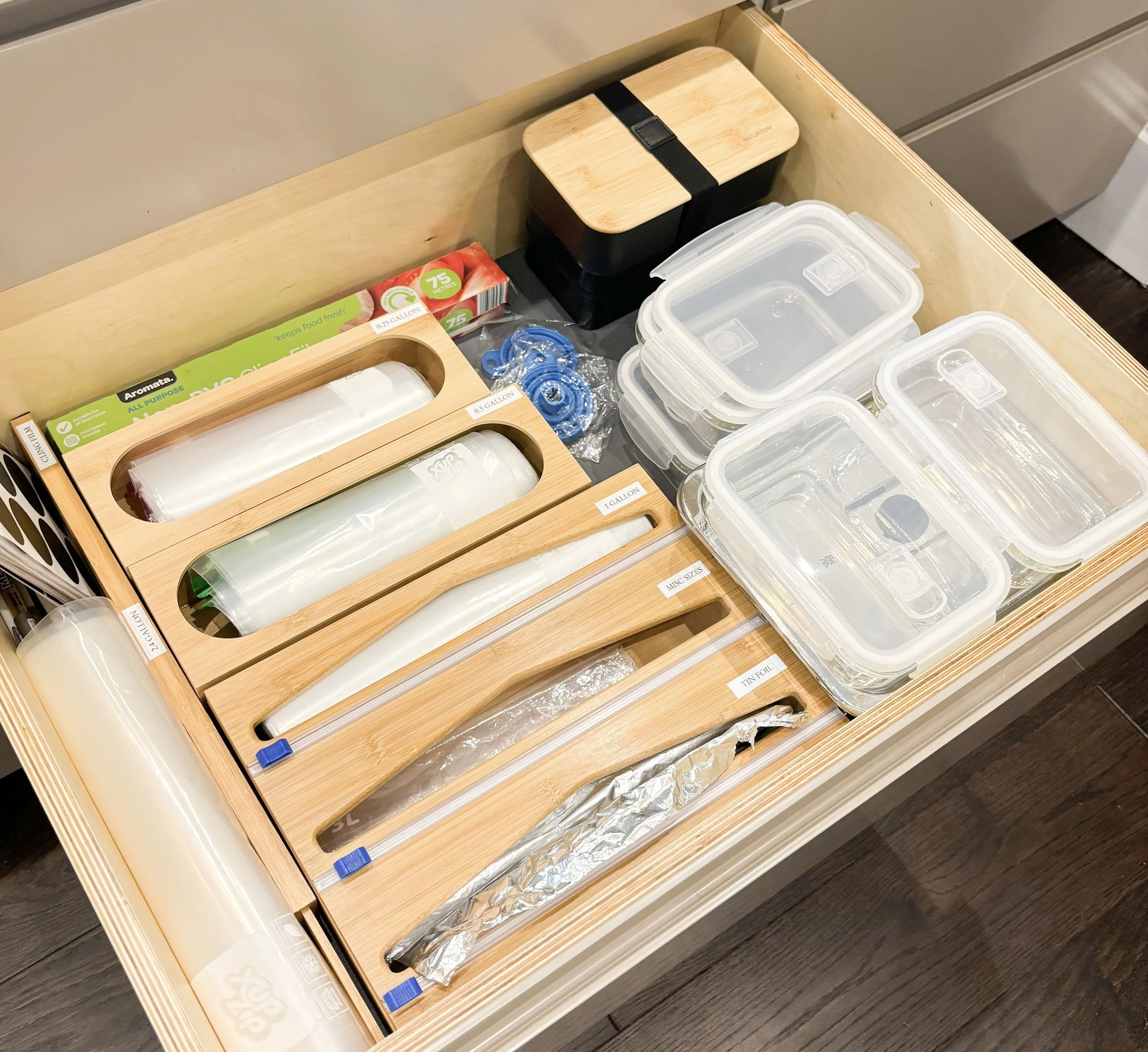
One of the simplest ways to prevent chaos from returning is to add small dividers or modular organisers. These modular pieces make it much easier to keep small items contained and visible. They instantly create boundaries for your items and make everything feel orderly.
Use a combination of:
Small square trays for loose bits
Narrow organisers for pens, scissors, and cables
Lidded boxes for items like batteries
Expandable drawer trays for kitchens
When spaces have structure, clutter can’t spread.
4. Group Items by Use, Not by Shape
A tidy drawer is about function, not aesthetics alone.
Try groupings like:
Tools zone: tape measure, mini screwdriver, spare nails
Tech zone: chargers, adapters, spare cables
Health zone: plasters, mini first-aid bits
Paper zone: pens, notepad, envelopes
This approach works especially well for kitchen drawers and entryway drawers, where items often get mixed by accident.
5. Keep Only What Fits the System
Once your zones are set, let the system guide how much stays in the drawer. If the ‘pens section’ only fits six pens, don’t add ten. If the tray for batteries is full, it’s full. This prevents the slow creep back into clutter. Think of it as creating a clutter-proof boundary that protects your drawer from overflowing.
6. Use Labels (Your Secret Weapon)
Labels are the unsung heroes of home organisation.
They:
Prevent family members from undoing your hard work
Encourage consistent habits
Make everyday items easy to find and return
You can label the tops of organisers, or the drawer itself if containers shift.
It’s especially useful for shared households and busy families where everyone dips into the same drawer.
Looking to build clearer storage habits across your home? Our home organisation services offer personalised, room-by-room structure.
7. Rotate Seasonal or Rarely Used Items
One reason clutter drawers become overwhelming is that they slowly collect seasonal pieces.
To keep your drawer in check, rotate items like:
Holiday batteries
Tape for wrapping
Travel locks
Torches
Move what you don’t need right now into a clearly labelled container elsewhere. This keeps your essentials drawer focused on today, not the entire year.
8. Consider Upgrading to a Command Centre Drawer
If your home tends to accumulate paperwork, reminders, and daily to-dos, consider transforming your junk drawer into a command centre drawer - a place to manage household life rather than store random clutter.
A command centre drawer might include:
A family notepad
School forms
Stamps
Spare envelopes
Charging cables
A dedicated spot for keys or fobs
A weekly planner or mini whiteboard
This transforms an area of chaos into a hub of calm productivity.
9. Keep a ‘Clear-Out’ Habit in Place
No matter how beautifully organised your drawer becomes, life happens. Things get tossed in under pressure. Stray items wander in. And that’s okay - as long as you maintain a simple rhythm for keeping things tidy.
Try this:
A 30-second reset every Friday
A monthly mini declutter
It’s the easiest way to stop junk drawers from overflowing and keep your system working long-term, especially once simple habits and clear zones are in place.
10. Make It Aesthetically Pleasing (Yes, Even a Junk Drawer Can Look Good!)
You can make junk drawers look beautiful - in fact, the visual calm reinforces the functional calm.
Try:
Matching organisers
A neutral colour palette
Soft-close inserts
Bamboo or clear acrylic trays
Coordinated labels
When you open the drawer and feel a little spark of joy, you’re more likely to keep it organised.
Why This Small Space Matters More Than You Think
A junk drawer may seem insignificant, but it represents something important: the tiny details that shape how your home feels every day.
When you open a drawer and everything has a place, you feel lighter, and you’re far less likely to face another overflowing clutter drawer. When finding scissors isn’t a hunt, your day moves smoothly. When the everyday chaos has structure, your whole home feels more effortless. Small shifts create big calm.
If you’re dreaming of organised drawers, simpler systems, and a more functional home that supports your lifestyle, our professional organising team would love to help. Explore our professional organisation services or get in touch to find out more.
Your calm, clutter-free home starts with the little things - even one drawer at a time.
Frequently Asked Questions
1. How many junk drawers is too many?
Most homes work best with one intentional catchall drawer. If you have two or three forming without meaning to, it may be a sign that a few everyday items need clearer homes elsewhere.
2. Where should a junk drawer be located in the house?
The best spot is a high traffic area where you naturally reach for small essentials. For most households this is the kitchen or entryway since both support daily routines.
3. What if my junk drawer shares space with utensils or tools?
Mixed purpose drawers work as long as each category has its own divider/container. The goal is not to separate categories completely, but to stop items blending into one unmanageable pile.
4. How do I organise a junk drawer in a very small kitchen?
Use vertical space inside the drawer with stackable trays, slim organisers and mini boxes so every item has a boundary. You may also benefit from moving bulky or rarely used items to a cupboard or shelf to keep the drawer for everyday essentials.
5. How often should I review what’s inside my junk drawer?
A quick monthly check usually keeps things running smoothly. If your household is busy or shared by several people a short reset every couple of weeks can stop clutter building before it becomes overwhelming.

Jessica has been part of the Homefulness team since 2019, first as a professional organiser and now leading business development and social media. With a background in merchandising and retail management, she pairs a sharp eye for styling with practical, systems-led organisation, and has helped clients across London and the South East create calmer, clutter-free homes.
Meet the Homefulness team →Found this useful? Add Homefulness as a preferred source on Google.