
Hybrid Home Organisation Tips for Work-Life Balance
The way we live at home has changed. For many households, home is no longer just a place to rest - it’s also where we work, study, create, and manage daily life. Dining tables double as desks, spare rooms shift between guest space and office, and corners of the living room quietly become work zones.
This blend of work and home life can be incredibly freeing - but without the right systems, it can also feel messy, distracting, and overwhelming.
That’s where hybrid home organisation comes in, a practical approach built around clear zones, contained storage and quick daily resets.
Rather than trying to separate work and home entirely, hybrid organisation focuses on creating flexible, intentional spaces that support multiple functions while still feeling calm and cohesive. With the right approach, your home can shift through the day smoothly, without clutter spreading into everything.
Below, we’ll walk through how to organise a hybrid home, set up flexible home office zones, and create storage that supports both productivity and everyday living.
What Is Hybrid Home Organisation?
Hybrid home organisation is the practice of setting up your home so spaces can serve more than one purpose comfortably, with simple systems that are easy to put away. This is especially helpful if you work from home part-time, share a space or need a room to switch roles during the day.
Instead of rigid room definitions like “office only” or “living room only”, hybrid organisation allows for:
Workspaces that blend into living areas
Storage that adapts to changing needs
Furniture that supports flexibility
Systems that can be reset easily at the end of the day
At its core, hybrid organisation is about supporting how you actually live, not how your home ‘should’ be used.
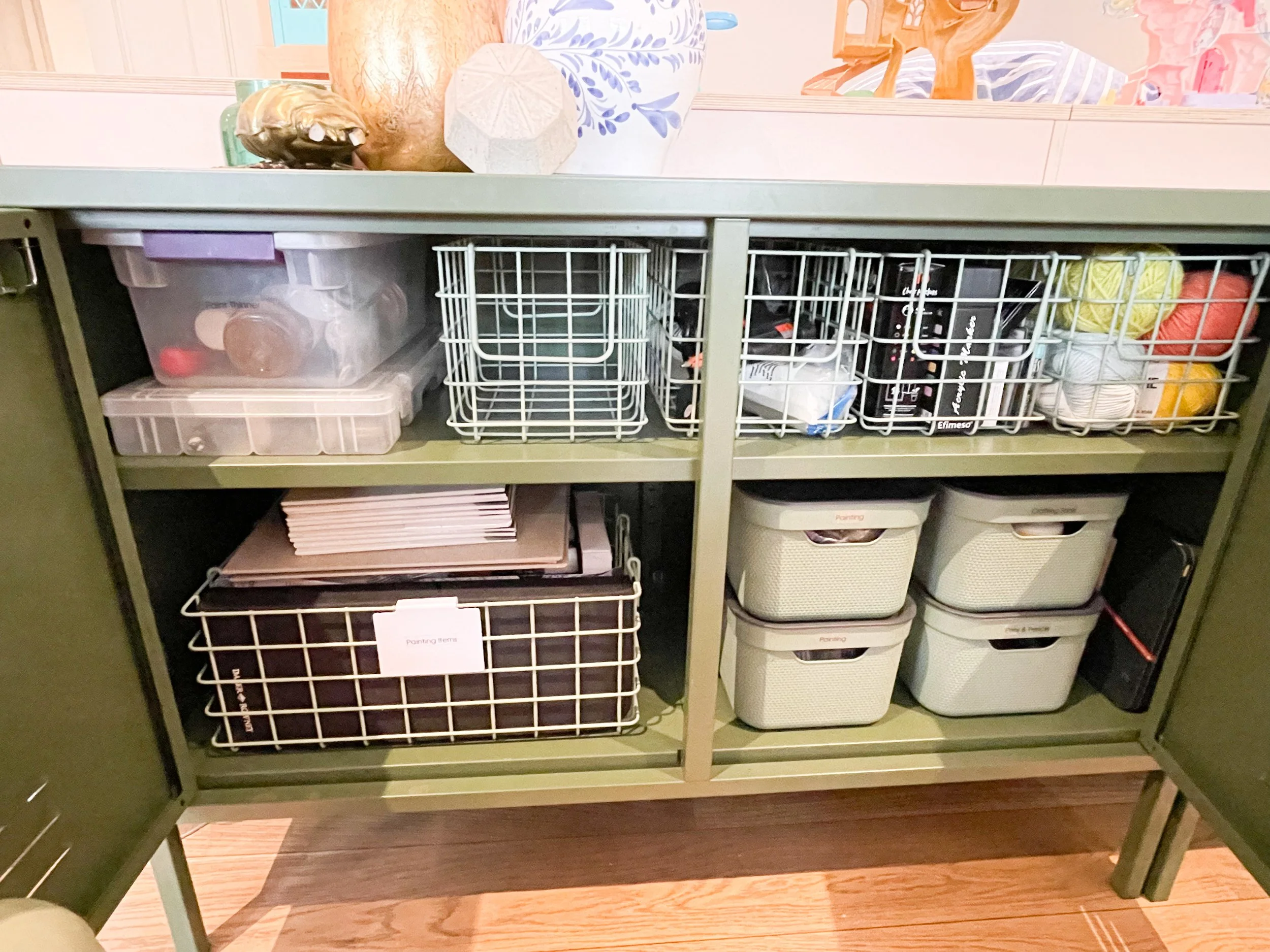
Can One Space Really Serve Multiple Functions?
Yes - when it’s organised thoughtfully.
The key is not trying to do everything at once, but creating clear zones within a space and supporting those zones with simple systems.
A single room can comfortably function as:
A workspace by day, relaxation space by night
A guest room and home office
A family area that includes a quiet work corner
A shared study zone with individual storage
The success of multipurpose spaces and zones comes down to boundaries, storage, and reset routines - not size.
Step One: Define Your Zones (Even in Small Spaces)
Before buying storage or rearranging furniture, start with clarity.
Ask yourself:
What activities happen here?
When do they happen?
Who uses this space?
From there, create home office zones or functional areas, even if they’re small and subtle.
Examples of Simple Home Office Zones
A dedicated desk area within a bedroom
A work drawer or cabinet in a living room
A mobile workstation stored away when not in use
A shared workspace with individual trays or files
Clear zones help your brain switch between modes - work, rest, family - which is essential for work-life balance.

Step Two: Storage Ideas for Multipurpose Spaces
When rooms serve more than one purpose, storage needs to work harder - but it doesn’t need to be complicated.
1. Remote Work Storage That Blends In
Choose storage that doesn’t visually dominate the space:
Closed cabinets for paperwork and tech
Baskets or boxes that match your home’s aesthetic
Drawer dividers to keep small items contained
Remote work storage should feel like part of your home - not an office dropped into it.
2. Vertical Storage (Often Overlooked)
Walls are valuable real estate, especially in smaller homes:
Floating shelves above desks
Wall-mounted organisers
Pegboards styled minimally
This keeps surfaces clear while maintaining easy access.
3. Contained, Not Spread
Clutter often appears when work items spill across a room.
Instead, aim for:
One drawer for work essentials
One shelf for reference items
One box or tray for ongoing projects
When everything has a defined home, refreshing the space becomes quick and almost automatic.
If your work items tend to spread across the house, our professional organisers can help you create contained systems that support both productivity and calm.
Step Three: Setting Up a Flexible Home Office
A flexible home office doesn’t need its own room, but it does need intention and clear workspace organisation.
Choose the Right Desk Setup
If space allows, modular desks are ideal for hybrid living. They:
Adapt to different layouts
Expand or contract as needed
Often include built-in storage
If you’re working from a dining table or console:
Use a dedicated desk mat
Store supplies in a single container
Clear everything away at the end of the workday
This visual reset helps protect your downtime.
Prioritise Workspace Organisation
Good workspace organisation isn’t about perfection, it’s about making your setup easy to use and to put away..
Keep only:
Tools you use daily
Items that support your workflow
A small personal touch (plant, notebook, lamp)
Everything else should live elsewhere.
Want a home office setup that packs away neatly and still feels good to work in? Take a look at our home organisation services if you’d like help building a flexible system around your space.
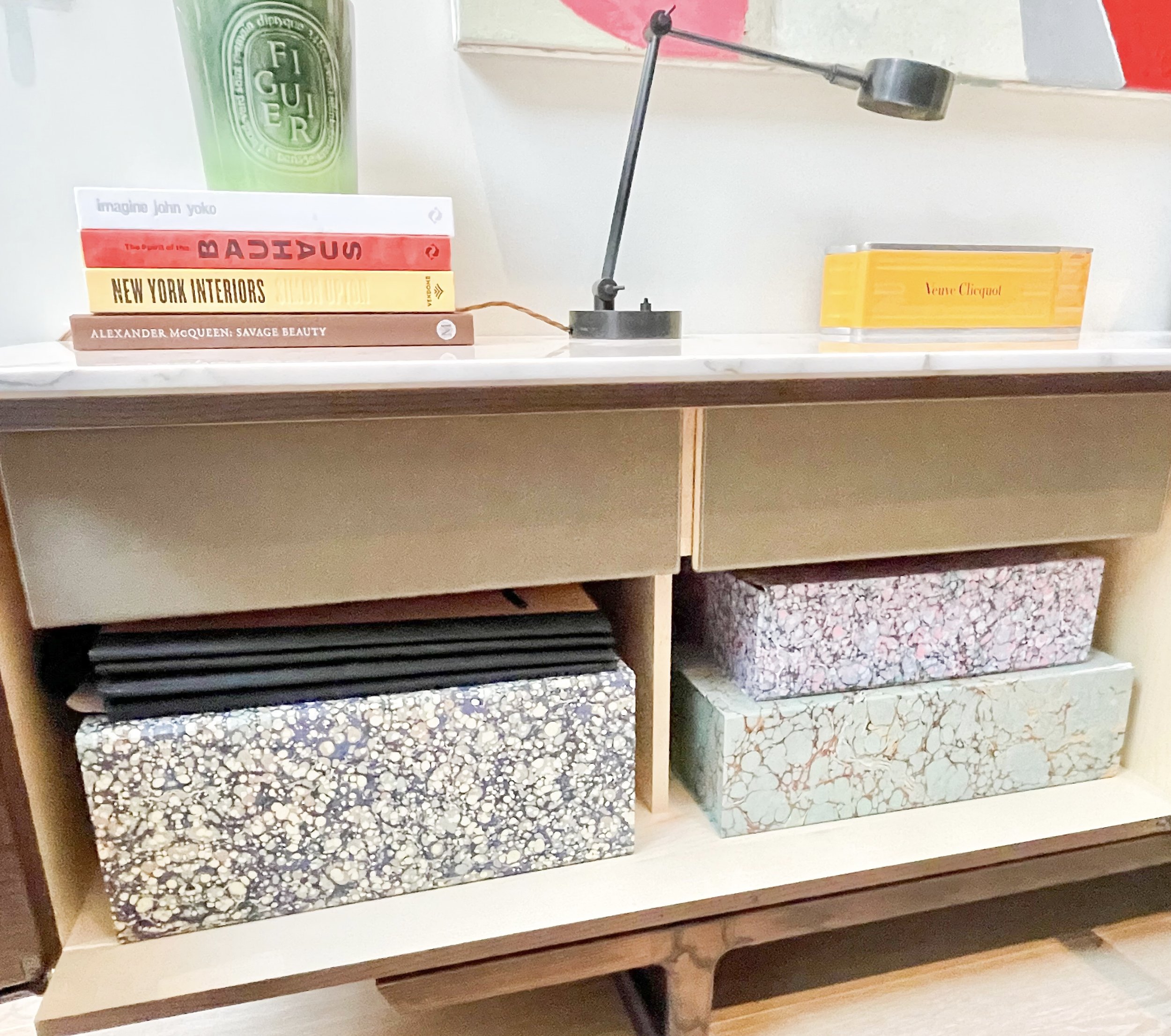
Step Four: Flexible Furniture That Works Overtime
Flexible furniture is one of the most powerful tools in hybrid home organisation.
Look for pieces that:
Serve more than one purpose
Can be moved easily
Offer hidden storage
Examples of Flexible Furniture
Ottomans with internal storage
Benches with drawers
Fold-away desks
Rolling carts for work supplies
Bookcases that divide zones in open-plan spaces
Flexible furniture allows your home to shift with your day - without constant effort.
Step Five: Creating Boundaries Without Walls
One of the biggest challenges of a hybrid home is mental separation. When work and life blur together, it’s harder to switch off.
You can create boundaries without building walls by using:
Rugs to define zones
Lighting changes (task lighting vs ambient)
Storage that closes
Furniture placement to subtly divide areas
Even small visual cues tell your brain, “This is a different mode now”. This is your shutdown routine, a simple signal that work is done for the day.
Step Six: Reset Rituals for Work-Life Balance
Organisation isn’t just about how a space looks - it’s about how it feels. Daily reset rituals are essential in a hybrid home.
At the end of each workday:
Put papers away
Close your laptop
Clear your work surface
Return supplies to their storage zone
This five-minute habit prevents clutter from building and makes it easier to switch off when the workday ends.
Step Seven: Supporting the Whole Household
Hybrid organisation works best when it supports everyone who lives in the space.
For shared homes:
Create individual storage for each person
Use labels where helpful
Keep systems simple and intuitive
When organisation feels supportive rather than restrictive, it’s far more likely to last.
Common Challenges and Gentle Solutions
“My home is too small”
Small homes benefit most from hybrid organisation. Micro-zones and contained storage can make even compact spaces feel intentional.
“I don’t want my home to feel like an office”
Choose storage and furniture that matches your home’s style. Hide work items when not in use.
“I can’t keep it tidy”
If it’s hard to maintain, the system may be too complex. Simplify, reduce, and focus on ease.
Why Hybrid Home Organisation Matters
When your home supports both work and rest, you gain:
Better focus during the day
Easier transitions between roles
Less visual noise
A calmer, more balanced environment
Hybrid home organisation isn’t about doing more - it’s about creating systems that quietly support you in the background.
A Final Thought
Your home doesn’t need to be perfect to work beautifully.
With thoughtful workspace organisation, flexible furniture, and clear zones, one space can serve many purposes - without sacrificing calm.
If you’d like personalised professional help setting up flexible zones, contained storage and simple reset routines, our Homefulness team can help you create a home that works beautifully for work and downtime.
Because balance doesn’t come from doing everything - it comes from organising with intention.
FAQs
Do I need a separate room to organise a hybrid home well?
Not at all! Most hybrid setups work best with small, defined zones and storage that can close or tuck away at the end of the day.
What should I store near my work zone and what should live elsewhere?
Keep daily essentials close, like laptop, charger, notebook. Store everything else away, especially paperwork and tech accessories that create visual noise.
What’s the simplest way to make a multipurpose space feel calmer fast?
Create one contained “work home” for supplies and build a five-minute reset into your day. Clear surfaces change the feel of a room quickly.
How can two people share one workspace without constant mess?
Give each person a small dedicated storage spot, like a tray, drawer or file. Shared systems only work when ownership is clear.
How do I stop work taking over my evenings?
Use a physical closing action, like putting your laptop away, switching lighting or clearing the desk. Small signals help your brain switch into rest mode.

Jessica has been part of the Homefulness team since 2019, first as a professional organiser and now leading business development and social media. With a background in merchandising and retail management, she pairs a sharp eye for styling with practical, systems-led organisation, and has helped clients across London and the South East create calmer, clutter-free homes.
Meet the Homefulness team →