
The Secret Language of Beautifully Organised Homes
There are homes that seem to possess a certain ease.
Shoes don't continually gather by the door. Kitchen worktops remain relatively clear. The post doesn't slowly take over the hallway table, and opening a cupboard doesn't require moving three other things before you can reach what you need.
It would be easy to assume that the people who live in these homes are simply more organised. That they spend more time tidying, have stricter routines or are naturally better at keeping on top of things.
But often, the difference is much quieter than that.
A beautifully organised home has a kind of secret language. Everything has been considered around the way the household actually lives: where belongings naturally arrive, where they're used, who needs to reach them and how easily they can be put away again.
The result isn't a home that never becomes untidy. Real homes rarely work like that. It's a home that is easier to return to order because the systems beneath it make sense.
If you've ever wondered how to keep a tidy house without feeling as though you're constantly tidying, the answer may have less to do with effort and more to do with creating a home that works with you.
Why does my house get messy again?
If you've spent an afternoon organising a room only to find it looking much the same a week later, it can be tempting to think you simply need to be more disciplined.
Usually, recurring clutter is telling you something more useful.
Perhaps the belongings gathering on the kitchen island don't have an obvious home. The children's shoes are stored too far from the door. The post has nowhere to land while it's waiting to be dealt with. Or a cupboard is so full that putting something away requires rearranging everything already inside it.
These small points of friction recur throughout the day.
When a system asks too much of us, we naturally find a shortcut. A coat goes over the back of a chair rather than onto a hanger upstairs. The school bag stays by the door rather than being returned to a cupboard. A kitchen appliance remains on the worktop because getting it in and out of its designated storage is simply too cumbersome.
Over time, these shortcuts become the clutter we find ourselves repeatedly clearing.
So rather than asking, Why can't we keep this tidy?, it can be more helpful to ask, What is this telling us about the way this space needs to work?
Start with the way your household moves
One of the most important principles of good home organisation is also one of the simplest: organise around real life, rather than an idealised version of it.
Before buying storage or assigning everything a place, notice how your household moves through the home.
Where do bags naturally land when everyone comes through the door? Where do you open the post? Where do children take off their shoes? Which kitchen ingredients do you reach for every morning? Where do clothes tend to accumulate at the end of the day?
These patterns are useful information.
If shoes are continually left beside the front door but their storage is elsewhere, perhaps the storage needs to move rather than the shoes. If paperwork consistently gathers on one end of the kitchen worktop, create a simple place nearby for papers that need action rather than expecting everyone to carry them into an office.
A beautifully organised home isn't designed against the habits of the people who live there. It responds to them.
This is one of the reasons there is no universal answer to how to keep your home tidy and organised. The system that works beautifully for one family may feel completely unnatural to another.
The best systems begin with understanding the household first.
Give everyday belongings intuitive homes
When something has an obvious place to live, putting it away requires very little thought.
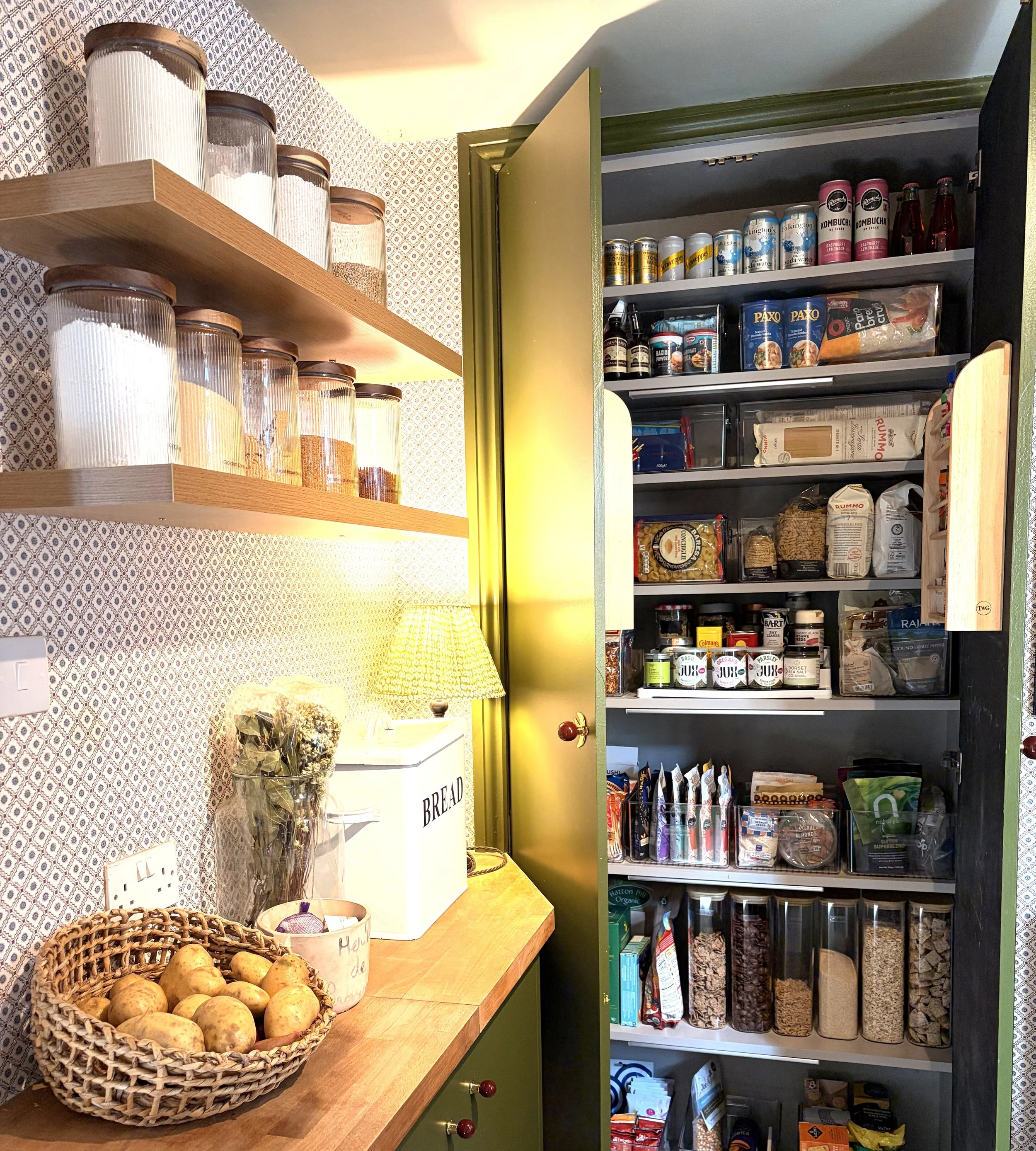
Keys might have a tray inside the entrance. Children's school bags might have hooks at a height they can reach themselves. Frequently used kitchen ingredients might sit together near the area where meals are prepared. Incoming post might have one contained place rather than several temporary piles around the house.
The important word is intuitive.
A designated home is only useful if it makes sense to the person using it. Store something too far from where it's needed, make its container difficult to access or create categories that are too complicated, and the system is unlikely to last.
This is particularly important for belongings used every day. The more frequently you interact with something, the easier its home should be to find and use.
That is why, when organising a home, we consider not only where something will fit but where someone would naturally expect to find it.
Over time, these decisions begin to create a quiet rhythm. You stop thinking about where the keys go because that's simply where they belong. You know where to find the spare bedding when guests arrive. Children know where their things live. Opening a kitchen drawer gives you exactly what you need.
The organisation begins to disappear into the experience of living there.
Make the easiest action the tidy action
The most sustainable organisational systems require surprisingly little effort.
If returning something to its place involves opening a cupboard, removing a box, lifting a lid and moving another container, it shouldn't be surprising when it gets left on the nearest surface instead.
The easier it is to put something away, the more likely the system is to maintain itself.
That might mean an open basket rather than a lidded box for children's toys. A drawer divider that gives everyday accessories an obvious place. Hooks for frequently used coats rather than hangers. Clear containers in a pantry so you can see what you already have. Or keeping breakfast ingredients together because they're used together every morning.
Visibility matters too. When we can see what we own, we're more likely to use it and return it to the right place.
This doesn't mean everything needs to be on display. Beautifully concealed storage can work exceptionally well. It simply means that inside the drawer, cupboard or wardrobe, the system should be clear enough to understand at a glance.
If you're considering how to keep a tidy house over time, look for opportunities to remove steps rather than add rules.
Leave a little breathing room
One of the least visible luxuries in an organised home is space.
Not necessarily more square footage or more storage, but enough room within the storage you already have for belongings to move easily.
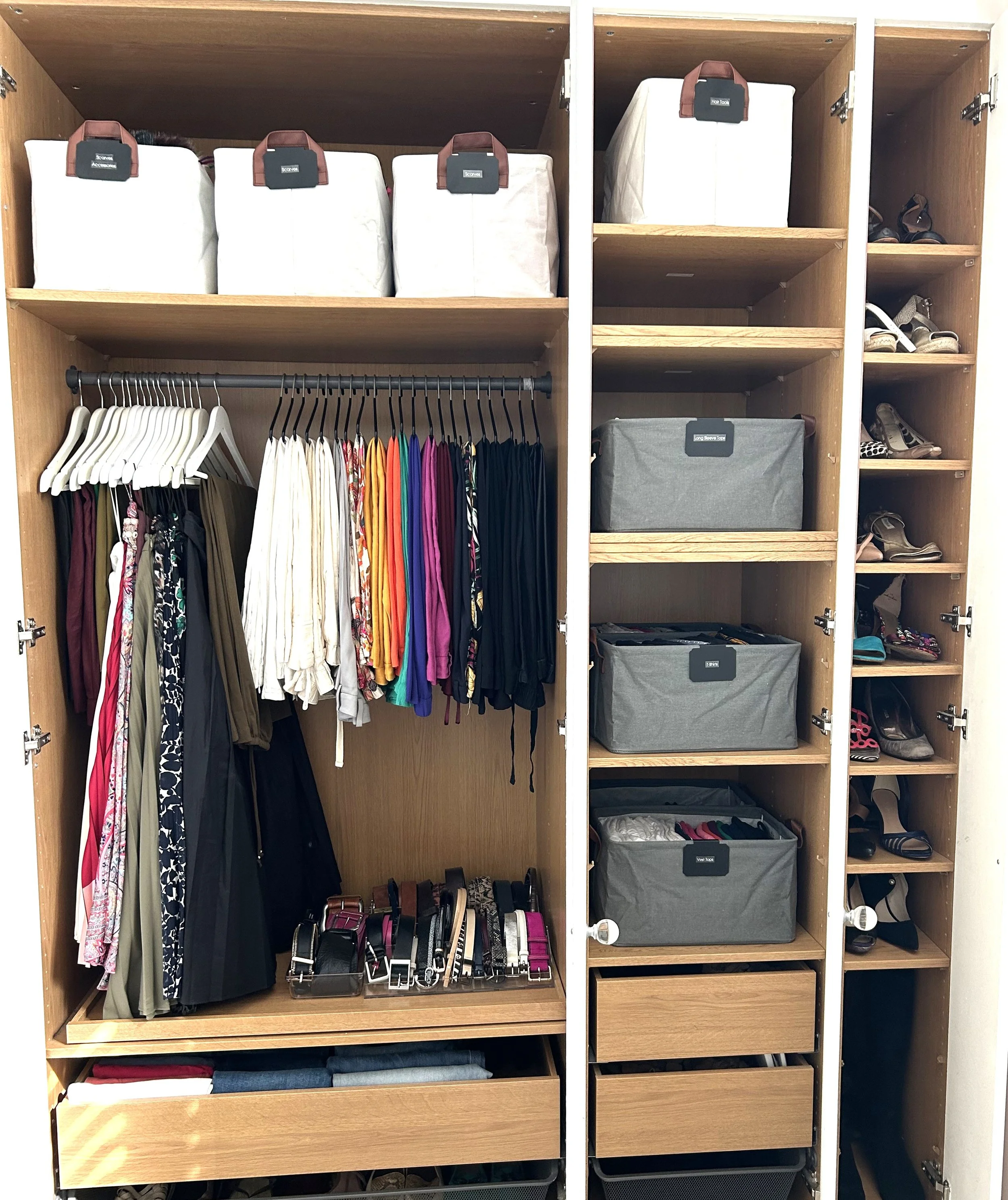
A wardrobe packed tightly from one end to the other is difficult to maintain, however beautifully it was initially arranged. A kitchen drawer filled to its absolute capacity quickly becomes frustrating. A shelf where every centimetre has been used leaves nowhere for everyday life to expand.
Good organisation needs breathing room.
When drawers, cupboards and shelves aren't overfilled, you can see what you own, take something out without disturbing everything around it and, importantly, put it back just as easily.
Sometimes creating that space means reconsidering what deserves to remain in your home. Thoughtful decluttering can be useful here, not because an organised home needs to be minimal, but because the belongings you value are easier to enjoy when they're given enough room.
The aim isn't emptiness. It is ease.
Build small resets into the rhythm of the day
Even the most thoughtfully organised home will become untidy. Breakfast happens. Children play. Clothes are worn. Deliveries arrive. Dinner is cooked. Life unfolds.
The difference is that good systems make resetting the home much simpler.
Rather than relying on long tidying sessions, small resets can be attached to moments that already exist in the day.
While leaving a room, take something with you that belongs elsewhere. After dinner, return the kitchen to a point where breakfast will feel easy the following morning. When the post arrives, discard what isn't needed and place anything requiring action in its designated spot. At the end of the day, spend a few minutes returning the main living spaces to their natural order.
These aren't rigid routines or yet another list of jobs to complete. They're small ways of closing one part of the day before moving into the next.
A ten-minute reset is also genuinely useful when you're wondering how to tidy a house quickly. But it works particularly well when everything already has somewhere obvious to return to. Without that underlying structure, tidying often becomes little more than moving belongings from one temporary place to another.
The system comes first. The habit simply supports it.
What does this look like in a real family home?
We see the importance of this frequently in our Homefulness projects.
In one family home, an area that repeatedly became untidy wasn't lacking in storage. There was, technically, plenty of it. The difficulty was that the storage had been arranged around what fitted where, rather than how the family actually used the space.
Everyday belongings were mixed with things used only occasionally. Children's items weren't always easy for them to access or return themselves, while frequently used pieces required several steps to put away.
Rather than simply tidying everything again, we reconsidered the space around the family's natural routines.
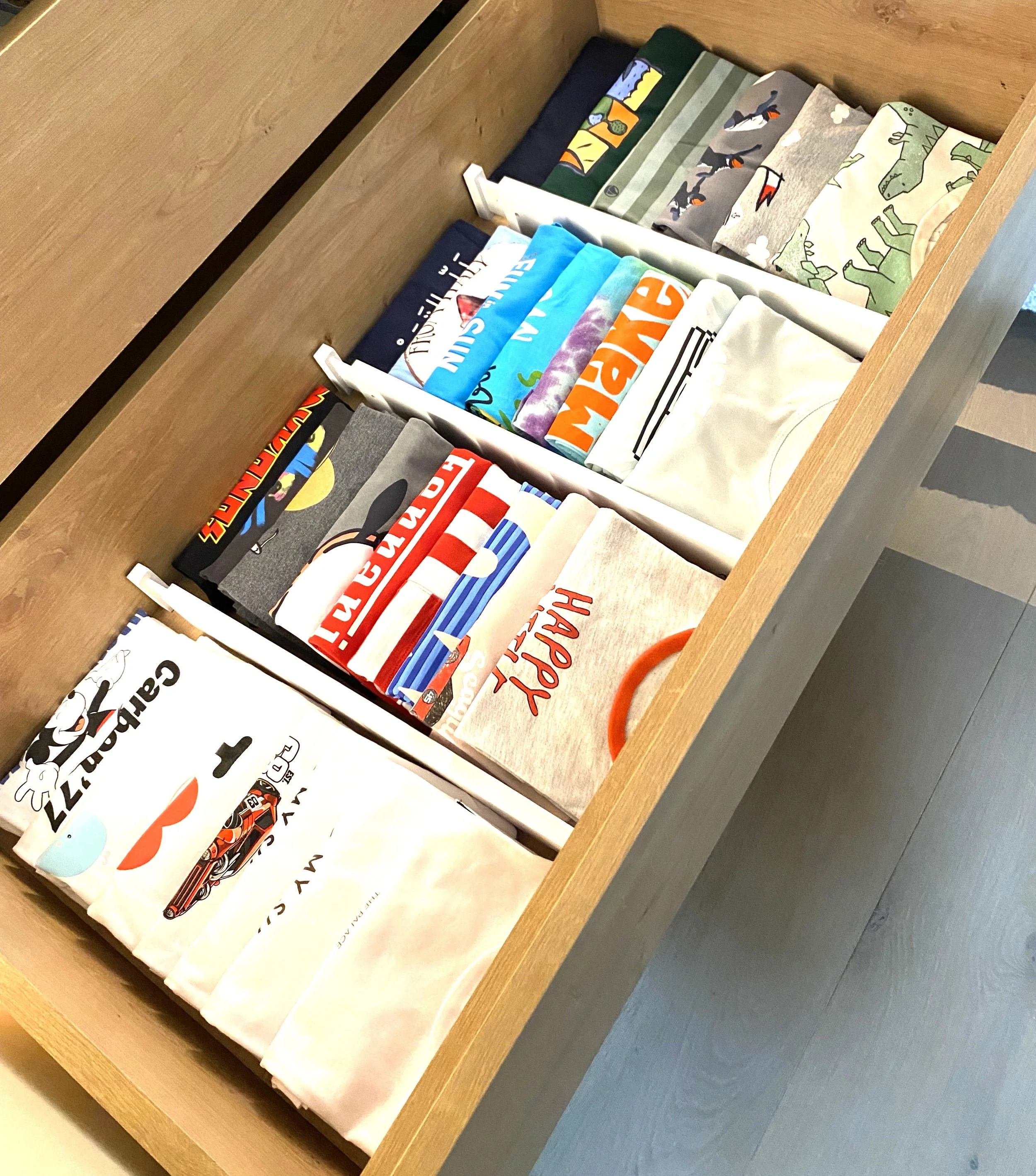
Frequently used belongings were moved to the most accessible positions. Categories became clearer. Items used together were stored together, and the system was simplified so that everyone could understand where things belonged.
Visually, the transformation was beautiful. But the more important change was what happened afterwards: the space became easier to maintain because putting things away finally felt natural.
That is always the measure of a successful system. Not simply how it looks on the day it is organised, but how well it continues to support the household weeks and months later.
How do you keep a tidy house with kids?
A beautifully organised family home should leave room for family life.
Children will take toys out. Shoes will appear by the door. Craft projects will cover the table. Clothes will be outgrown and routines will change.
Trying to prevent all of that isn't realistic — nor is it the point.
When considering how to keep a tidy house with kids, simplicity and accessibility matter far more than perfection. Children are much more able to participate in putting their belongings away when they can see where things belong and reach the storage themselves.
Keep categories broad enough to understand. Store frequently used toys and belongings within easy reach. Use visual cues where useful, and resist creating systems that require adult-level precision to maintain.
A toy doesn't necessarily need to return to exactly the same position each time. It may simply need to return to the correct basket.
The aim is to make returning a room to order achievable, not to stop the room from ever becoming messy.
Let your systems change when your life does
An organisational system isn't a permanent fixture.
A nursery becomes a child's bedroom. Toys change as children grow. Working patterns shift. Hobbies arrive. Wardrobes evolve. A kitchen may need to work differently once children begin preparing their own breakfast or packing their own school bags.
A system that once worked perfectly may eventually begin creating friction.
When that happens, it doesn't mean you've failed to stay organised. It simply means the system needs to catch up with your life.
Notice the signs. A cupboard that suddenly feels impossible to keep tidy. A category that continually overflows. A particular surface that has become a magnet for belongings. Something you're constantly moving from one place to another.
Instead of repeatedly resetting the same problem, reconsider the system underneath it.
Some areas may need a small adjustment every few months; others might work beautifully for years. There is no correct timetable. Review your organisation when something begins to feel harder than it should.
A home should evolve with the people living in it.
When can professional home organisation help?
Sometimes it is easy to recognise that a home isn't working, but much harder to see why.
Perhaps you've organised the same spaces several times and the clutter always returns. Perhaps you're trying to make several rooms work together more intuitively. Or perhaps life is simply too full to step back and rethink the home as a whole.
Professional organisation brings an outside perspective to those everyday patterns.
At Homefulness, our approach to bespoke home organisation begins with understanding the people who live in the home: their routines, belongings, priorities and the small frustrations they encounter every day.
From there, we create considered systems around real life - from kitchens and wardrobes to children's spaces, paperwork and whole-home organisation.
The result should never feel like somebody else's idea of an organised home imposed on yours. It should feel unmistakably like your home, simply working better.
The quiet language of an organised home
Perhaps the secret to keeping a tidy house is that, eventually, you shouldn't have to think very much about keeping it tidy at all.
The shoes have somewhere natural to go. The post has a place to land. The things you use every morning are where you reach for them. Cupboards have enough breathing room to make putting something back easy. And when life inevitably disrupts the order, the home has a natural place to return to.
As we explored in September's Journal, Creating a Calm Home: How Thoughtful Organisation Can Transform the Way You Live, the real value of organisation extends far beyond how a home looks. It can remove small points of friction and create more room for the way we want to live.
A beautifully organised home doesn't need to be immaculate.
It needs to understand you.
And perhaps that is its secret language: a collection of quiet, considered decisions that allow everyday life to unfold with a little more ease.
If your home feels harder to maintain than it should, Homefulness can help you create intuitive systems designed around the way you live.
Frequently Asked Questions
How can I keep my house tidy every day?
Start by making sure frequently used belongings have clear, intuitive homes close to where they're actually used. Once those systems are in place, small resets throughout the day become much easier because you're returning things to an obvious place rather than deciding where they should go each time.
Why does my house get messy so quickly?
Recurring mess often indicates friction within an organisational system. Storage may be inconvenient, belongings may not have a clear home, cupboards may be too full or the system may no longer reflect the way your household lives. Notice where clutter repeatedly gathers - it can often tell you what needs to change.
How do I organise my home so it stays tidy?
Organise around your household's natural routines. Consider where belongings enter the home, where they're used and who needs to access them. Give everyday items simple, accessible homes and leave enough space within cupboards and drawers for belongings to be easily returned.
What daily habits help keep a home tidy?
Small resets tend to be more sustainable than long tidying sessions. Deal with post when it arrives, return belongings as you leave a room, reset the kitchen after dinner and take a few minutes at the end of the day to return key spaces to order. These habits work best when good organisational systems are already in place.
How can I keep a tidy house with children?
Create simple systems children can understand and access themselves. Keep frequently used belongings within reach, use clear categories and make putting something away as easy as taking it out. The aim isn't a home that never becomes messy, but one the whole family can return to order more easily.
How often should home organisation systems be reviewed?
There is no fixed schedule. Review a system when you notice that a space has become consistently difficult to maintain or when something changes in your household. Children's ages, work routines, hobbies and the belongings you own all evolve, and your organisation should be able to evolve with them too.
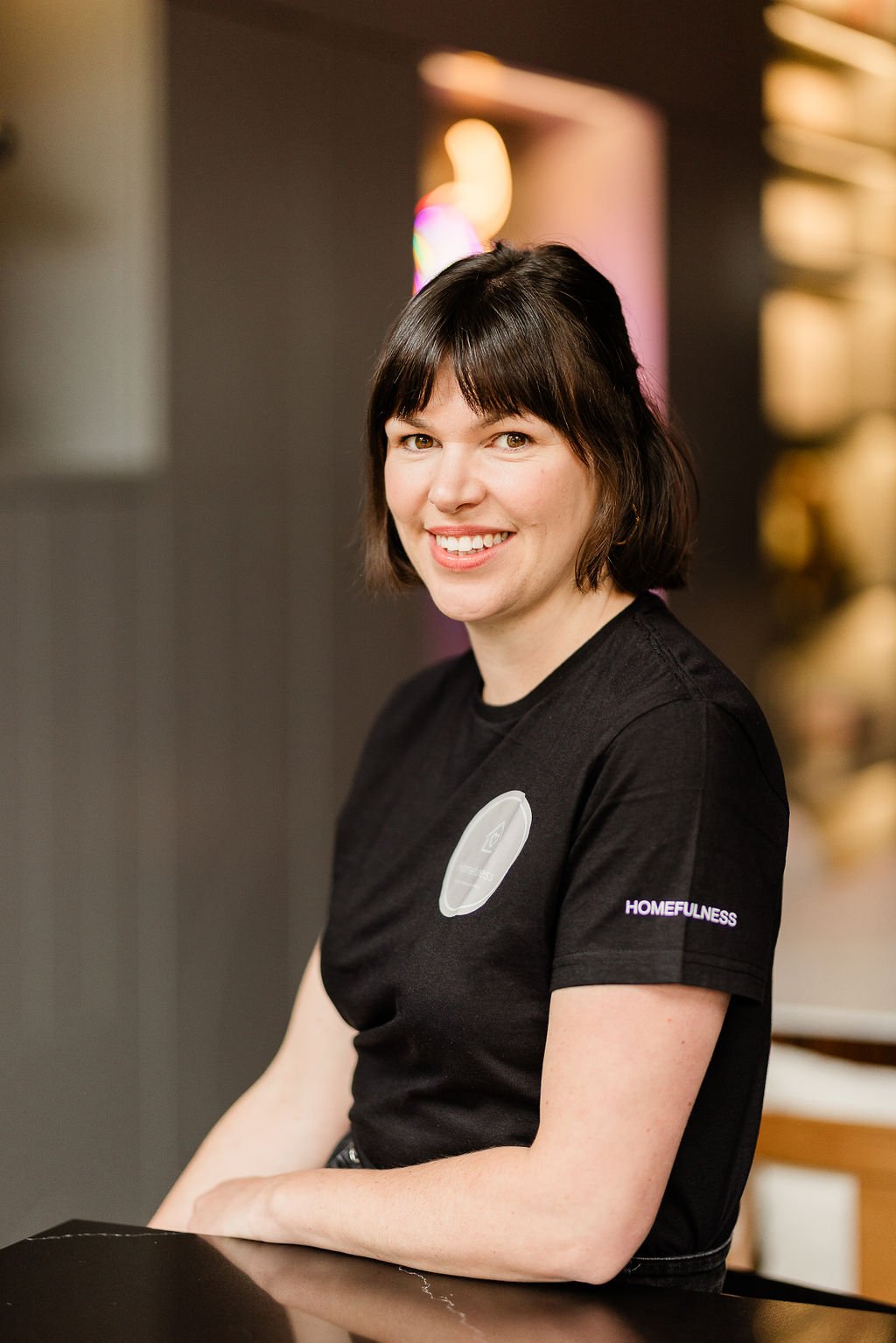
Jessica has been part of the Homefulness team since 2019, first as a professional organiser and now leading business development and social media. With a background in merchandising and retail management, she pairs a sharp eye for styling with practical, systems-led organisation, and has helped clients across London and the South East create calmer, clutter-free homes.
Meet the Homefulness team →Found this useful? Add Homefulness as a preferred source on Google.