
Best Home Organiser UK: How to Choose the Right One
A practical 2026 buyer's guide — what to look for, what to ask, what to pay
Hiring a professional home organiser feels like a leap until you’ve done it. There are dozens of people offering the service across the UK, prices vary by a factor of three, qualifications are inconsistent, and most of the reviews you can find are on the websites that publish them. Here’s a practical buyer’s guide for 2026 — what a good UK home organiser actually does, what to ask before you commit, what fair pricing looks like, and the red flags worth walking away from.
What does a professional home organiser actually do?
A professional home organiser doesn’t just tidy. The work usually breaks into four phases.
Assessment. The organiser visits your space (in person or by video), understands how you actually live in it, and identifies what’s working and what isn’t. A short visit at this stage is often paid — it’s skilled diagnostic work, not free sales.
Planning. They produce a scope: which rooms, which categories of belongings, how long, how many people, and what the finished result should look and feel like.
Sourcing. For projects involving new storage, the organiser specifies containers, baskets, drawer inserts, and labelling. Good ones design the system around your stuff, not the other way round.
Hands-on organising. The actual work — emptying, sorting, decluttering, placing, labelling, styling. This is the visible part, but it’s the smallest portion of skilled time.
If a home organiser only declutters and leaves, that’s decluttering — a useful service, but not the same thing. True organising builds systems that survive normal life.
The three tiers of UK home organising
UK home organising is more segmented than it looks. Knowing which tier you need will save you time and money.
Tier 1 — Solo organisers. A single person, often working hourly, typically £40–£80 per hour. Most are below the £90,000 VAT threshold and so don’t charge VAT. Ideal for single-room projects, decluttering, and clients who want the consistency of one familiar face. The APDO directory is a useful starting point for finding credible solo professionals.
Tier 2 — Small studios. Small teams, usually two to four organisers, working on project rates from around £200 a session. May or may not be VAT-registered depending on size. A studio can field a small team for medium projects (whole flats, family homes) and brings more capacity than a solo provider.
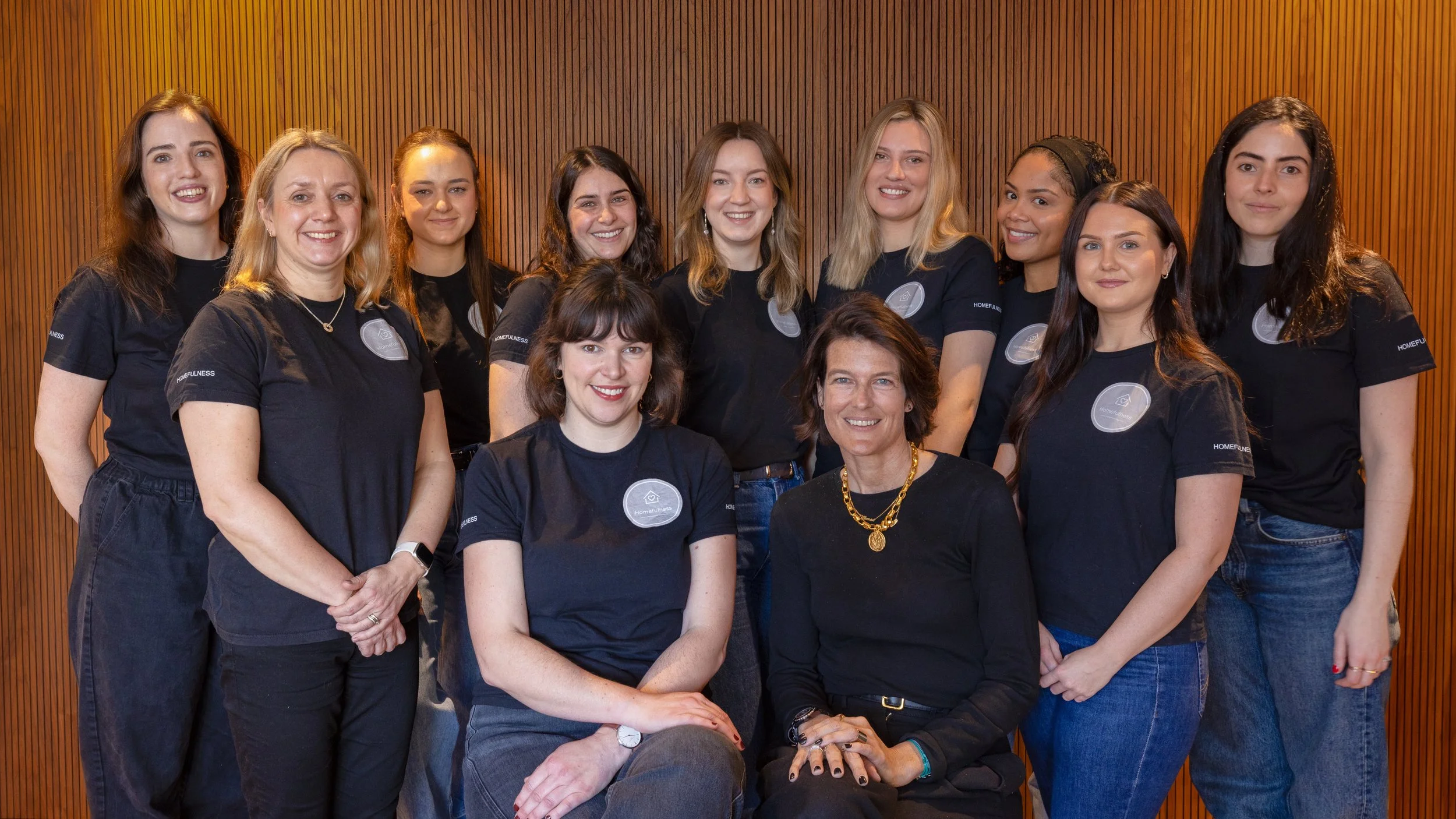
Tier 3 — Full-service concierge. A full team plus design, sourcing, project management, and styling. Priced by project rather than by hour. Used for moves, downsizing, full-home overhauls, and clients who want a finished, design-led result. This is the tier where Homefulness operates, alongside other specialist concierge services. Premium pricing reflects a fundamentally different scope of work.
Pick a tier that matches the job. Hiring a concierge service for a single wardrobe is overkill; hiring a solo organiser for a five-bedroom move is under-resourced.

Ten criteria for choosing your UK home organiser
Use these in order — the first three are non-negotiable.
1. APDO membership. The Association of Professional Declutterers and Organisers is the UK trade body. Members commit to a code of conduct and appear in a vetted directory at apdo.co.uk/find-an-organiser. Not the only credential, but the easiest one to verify.
2. Public liability insurance. Ask, and ask to see a certificate. Anyone handling your belongings in your home should carry it. If they hesitate, walk.
3. A real track record. How many years, how many projects, what’s the geographic coverage? A two-year-old solo business is fine for small projects; a five-bedroom move calls for someone with hundreds of moves behind them.
4. Reviews from multiple sources. On-site testimonials are easy to curate. Look for Google reviews, Trustpilot, and press features. A credible operator will have at least two of those three.
5. Clear scope of service. Is this decluttering only, organising only, or full service? Will they coordinate movers and donations? Will they shop for storage? Specifics matter — vague scopes lead to disputed invoices.
6. Pricing transparency. Published rates beat “by quote only”. Look for clarity on whether rates include VAT (Tier 1 rarely does, Tier 2 and 3 usually do), what’s included in a session, what triggers additional fees, and how reimbursable purchases (storage products) are handled.
7. Team or solo, and is it a fit? A premium concierge team is wonderful for big projects but can feel intrusive in a small flat. A solo organiser is intimate and consistent but slow on big jobs. There’s no right answer — pick what suits the project and your home.
8. A design sensibility you actually like. Browse the portfolio. If their finished projects don’t look like a home you’d be happy living in, the styling won’t suddenly improve in yours.
9. Discretion and confidentiality. Premium clients should ask explicitly about NDAs, discretion practices, photography permissions, and confidentiality of the working team. Reputable operators welcome the question.
10. Bespoke product sourcing. sk whether organising products will be sourced specifically for your space or pulled from a stock van. The strongest operators take measurements at an in-home consultation, source baskets, dividers and bins bespoke to those measurements, and deliver them to your property before any organising day. Stock-based teams cut corners on fit, finish and aesthetic — and you'll see it within a month. A useful question to ask: "Will my organising products be specified for my space, or chosen from what you happen to have?"
Red flags to walk away from
These signs come up often enough to be worth naming.
• No public reviews, no portfolio, no insurance proof — especially in combination.
• Pressure to commit before any consultation. Reputable organisers always offer a discovery conversation before a paid visit.
• Vague “day rates” with no breakdown of what’s included. Hides hourly cost.
• Casual use of “KonMari” branding without acknowledgement that it’s a trademarked methodology with specific certification.
• Refusal to provide a written scope before starting work.
• No business address, no company number, no VAT number — at least one of those should be findable.
What does it cost in the UK in 2026?
UK home organising pricing varies more than most clients expect, mostly because of the three tiers above. As a rough 2026 guide:
• Solo organisers: £40–£80 per hour, usually ex-VAT.
• Small studios: project rates from around £200 per session, often + VAT.
• Full-service concierge: £250–£500+ per session base rate, + VAT, with additional hours typically £80–£100 per organiser per hour + VAT.
Always confirm whether prices are quoted inclusive or exclusive of VAT. Most independent organisers are below the VAT threshold and don’t charge it. VAT-registered studios and concierge teams add 20% on top of the figures they quote. A “£90/hour” Tier 1 organiser and a “£90/hour + VAT” Tier 3 organiser are not the same price — and you only find out at invoice time if it wasn’t made clear up front.
Where you'll see the biggest variance between tiers is in product sourcing. Solo organisers and small studios typically work from stock — a van of common baskets, hoping something fits. Full-service concierge teams source product bespoke after taking measurements at an in-home consultation, with the curated product list delivered to the property before the project starts. The per-project cost sits higher, but the finished result aligns far more closely with the brief, and the system survives daily use rather than slowly unravelling within weeks.
A note on consultations: phone and video discovery calls are typically free across the UK industry, including at Homefulness. On-site consultations are almost always paid — at Homefulness, that’s £95 + VAT for up to an hour. It’s skilled diagnostic work; treat a free on-site visit as a red flag, not a perk.
Where to find a reputable UK home organiser
Four reliable starting points:
• APDO directory: apdo.co.uk/find-an-organiser — searchable by postcode and specialism.
• Google + Trustpilot: cross-reference reviews from multiple platforms. One source can be curated; two cannot.
• Press features: national interiors press (The Times Bricks & Mortar, Country Living, House Beautiful) tends to feature credible operators. Press inclusion is a vetting filter in itself.
• Personal recommendation: the most reliable but the hardest to come by. Ask in local parents’ groups, on Nextdoor, or in your building’s WhatsApp.
If you’re in London, Cambridge, or Northamptonshire, Homefulness covers those areas directly and travels nationally for moves and full-home projects.
When should you book?
A practical timeline:
• House moves: 4–8 weeks before the move date. Premium concierge teams book up earliest.
• Whole-home overhauls: 3–4 weeks out.
• Single rooms: 1–2 weeks usually fine.
• Pre-Christmas decluttering: book before November.
• January resolution organising: the busiest month — book in December.
End of August (school return) and the first three weeks of January are demand spikes nationally.
Frequently asked questions
Do I need to declutter before the organiser arrives?
No. Decluttering is usually part of the service. Organisers prefer to see your space as-is — that’s how they understand how you actually live.
How long does a typical project take?
A single wardrobe: 3–4 hours with one organiser. A small kitchen: 4–6 hours. A whole flat: 2–4 days with a small team. A full move and unpack: 1–2 weeks across several sessions.
Will they judge my mess?
A professional won’t. We’ve seen everything. The job is to fix the system, not to comment on what got you here.
What happens to the items I get rid of?
A good UK organiser will coordinate donations to charity, removal of recyclables, and waste disposal. Always confirm what’s included in the scope and what’s billed separately.
Are UK home organisers always VAT registered?
No. Most solo organisers are below the £90,000 VAT threshold and don’t charge VAT. Studios and concierge teams usually are registered. Always check whether quoted prices include or exclude VAT before you commit.
Can I work alongside the organiser?
Yes, particularly for sentimental items. Tell the organiser at the discovery stage if you’d like to be involved, or if you’d rather hand over and walk away.
Do organisers travel outside their main service area?
Concierge teams routinely do, especially for moves. Solo organisers may charge for travel time. Always confirm at the consultation stage.
Is one session enough?
For one room, often yes. For a whole home, no — plan in phases. A good organiser will be honest about that at the consultation rather than over-promising.
Ready to choose well
Hiring a professional home organiser should feel like a relief, not a risk. Use the nine criteria above to vet anyone you’re considering, walk away from the red flags, and pick the tier that matches your project. If you’re in London, Cambridge, or Northamptonshire and want to talk through your project, book a free discovery call with Homefulness — we’ll be honest about whether we’re the right fit before you commit to anything.

Caroline founded Homefulness in 2019 after a 13-year career at Ernst & Young, where she rose to audit senior manager advising CAC 40 boards in Paris, New York and Singapore. Today she leads a London-based team that has transformed hundreds of UK homes with a fully-managed, white-glove approach to decluttering, organising and move management.
Meet the Homefulness team →Found this useful? Add Homefulness as a preferred source on Google.
