
Eco-Friendly Storage: Sustainable Ways to Organise Your Home
Creating an organised home is one of the most calming things you can do - but it doesn’t have to come at the expense of the planet.
In recent years, many of us have become more conscious of what we bring into our spaces: how much we consume, how much we waste, and whether the ‘quick fixes’ we buy actually support a more intentional lifestyle.
That’s where eco home organisation comes in.
Sustainable organising is about more than simply swapping plastic bins for bamboo baskets. It’s about building systems that are thoughtful, long-lasting, and supportive of everyday life - while reducing clutter, waste and overwhelm.
If you’ve been wondering…
How do I organise sustainably?
What is the best eco-friendly storage material?
Are there plastic-free storage bins?
How can I avoid single-use containers?
How do I store items in a low-waste way?
…this guide is for you.
Quick sustainable storage rules: declutter first, reuse what you have, choose durable materials, keep categories clear, buy fewer pieces you’ll keep long-term.
Below are practical, beautiful ways to organise with less waste, avoid unnecessary plastic, and design low-impact systems that feel as calm as they look.
1. Start With Less (The Most Sustainable Step of All)
Before you buy a single basket or container, pause.
The most eco-friendly storage solution will always be the one you don’t need.
Sustainable organisation begins with decluttering - because when we reduce what we own, we naturally reduce what we need to store.
Ask yourself gently:
Do I truly use this item?
Would I miss it if it disappeared tomorrow?
Is it adding value to my daily life, or just taking up space?
The less excess you keep, the fewer products you need, and the more sustainable your home becomes by default.
If you want help decluttering before you invest in new storage, our decluttering service can help you reduce what you own and create calmer systems that last.
2. Reuse What You Already Have at Home
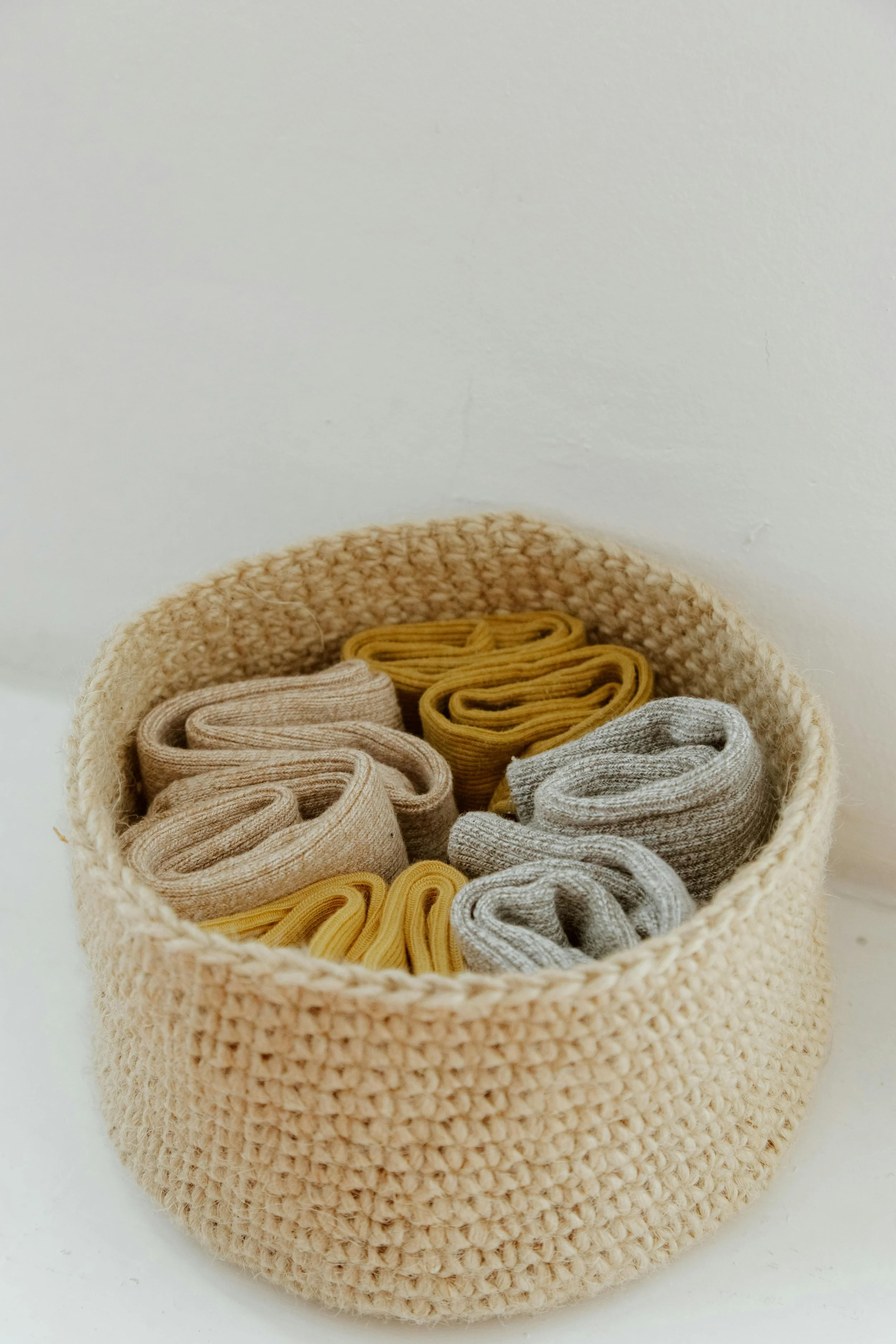
One of the easiest ways to fully embrace zero waste storage is simply to look around your home first.
So often, we already own storage - it’s just not being used intentionally.
Ideas include:
Shoeboxes for small accessories
Glass jars from sauces or jams for pantry staples
Gift boxes for keepsakes
Old drawers repurposed as organisers
Baskets moved from one room to another
Eco home organisation isn’t always about buying something new - it’s about using what you already have, beautifully and thoughtfully.
3. Choose Natural Materials Over Plastic
When you do need to purchase storage, material matters.
Plastic containers are convenient, but they can crack, discolour, and get replaced quickly - creating more waste over time.
Instead, opt for sustainable containers made from:
Bamboo (renewable, lightweight, elegant)
Wood (durable, timeless, repairable)
Glass (ideal for food storage and pantries)
Metal (long-lasting and endlessly reusable)
Organic cotton or linen (soft storage with low environmental impact)
Tip: where possible, choose single-material pieces that are easier to reuse, repair or recycle later.
Natural materials tend to feel calmer visually too - creating a home that feels grounded, warm, and intentional.
4. Explore Plastic-Free Storage Bins
These bins can be just as functional as regular ones (if not more so).
Plastic-free storage options include:
Wooden crates
Woven seagrass baskets
Metal trunks or boxes
FSC-certified cardboard organisers
Fabric bins made from recycled textiles
If it’s for a damp space like a bathroom or utility area, prioritise metal or sealed glass over cardboard.
These choices are especially beautiful in open shelving, wardrobes, and family spaces where storage is part of the decor.
Sustainable storage should feel considered, not clinical.
5. Avoid Single-Use Containers in the Kitchen
The kitchen is often the biggest hotspot for disposable clutter - cling film, sandwich bags, plastic tubs, takeaway containers that pile up.
A sustainable pantry and kitchen setup can include:
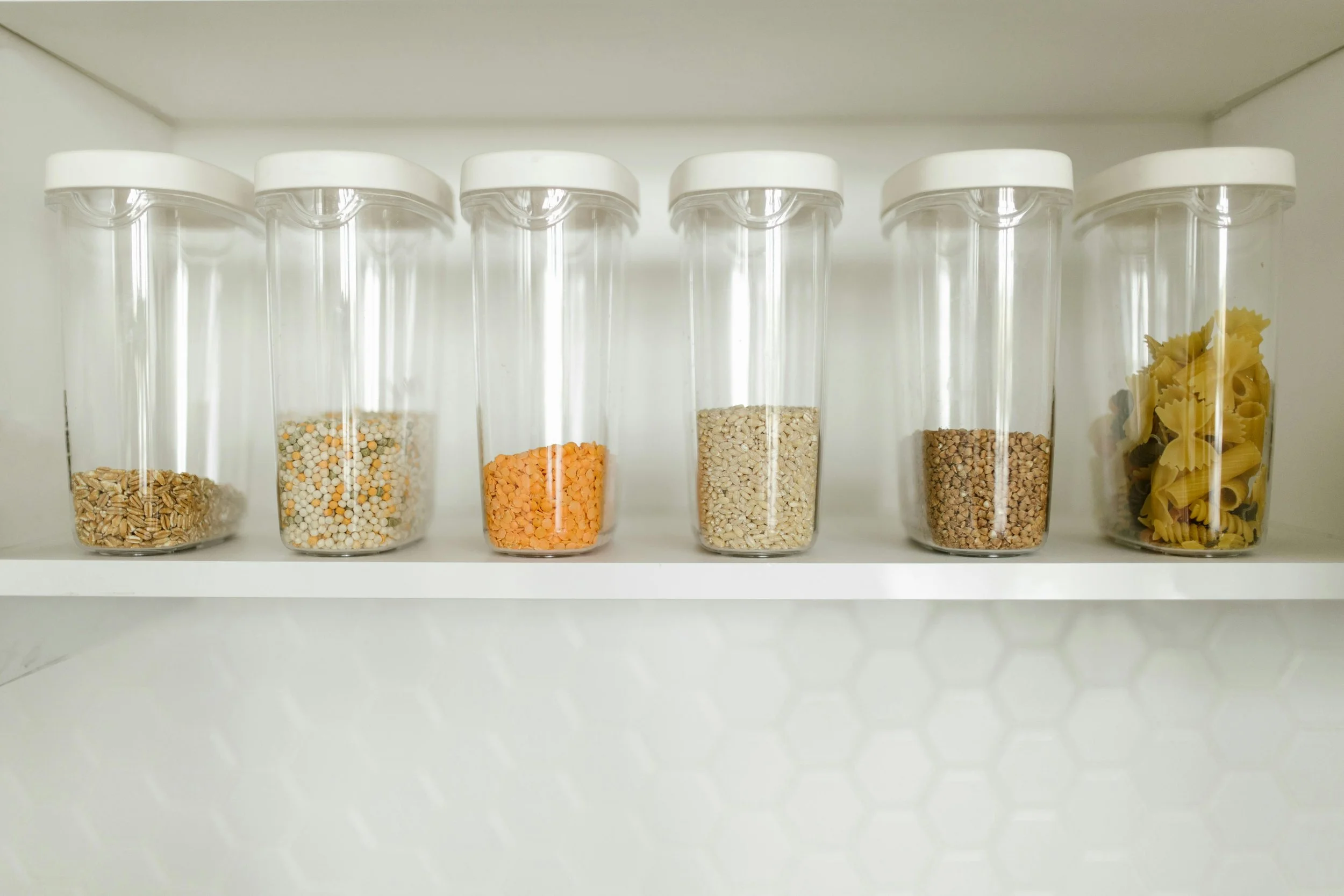
Glass jars for grains, pasta, and snacks
Stackable glass containers for leftovers
Silicone lids instead of plastic wrap
Beeswax wraps instead of cling film
Refillable spice jars rather than sachets
These swaps reduce waste and create a kitchen that feels more organised, elevated and easy to maintain. Start with the items you use every day, and you’ll feel the difference quickly without replacing everything at once.
6. Create a Simple Refill Station
One of the most effective low-waste habits is building a small ‘refill zone’ at home.
This can include everyday essentials such as:
Hand soap
Washing-up liquid
Laundry detergent
Cleaning sprays
Dishwasher powder
Decant into glass or aluminium bottles, label them clearly, and buy refills in bulk when possible.
Not only does this support low-waste storage, but it also makes daily routines feel smoother.
7. Choose Modular Low-Impact Systems
Sustainability is also about longevity.
The best organising systems are the ones that grow with you, rather than needing constant replacement.
Look for:
Adjustable shelving
Stackable sustainable containers
Multi-purpose baskets
Modular drawer inserts
These modular systems reduce the need to buy new storage every time your lifestyle shifts.
8. Shop Second-Hand Storage Before Buying New
One of the most sustainable choices you can make is purchasing storage second-hand.
Beautiful pre-loved finds might include:
Vintage dressers with deep drawers
Wicker baskets
Wooden shelving
Glass jars and kitchen canisters
Storage trunks for linens or toys
Look for sturdy joins, solid materials, and pieces you’d happily keep for years. Second-hand storage reduces demand for new manufacturing and adds warmth and character to your home.
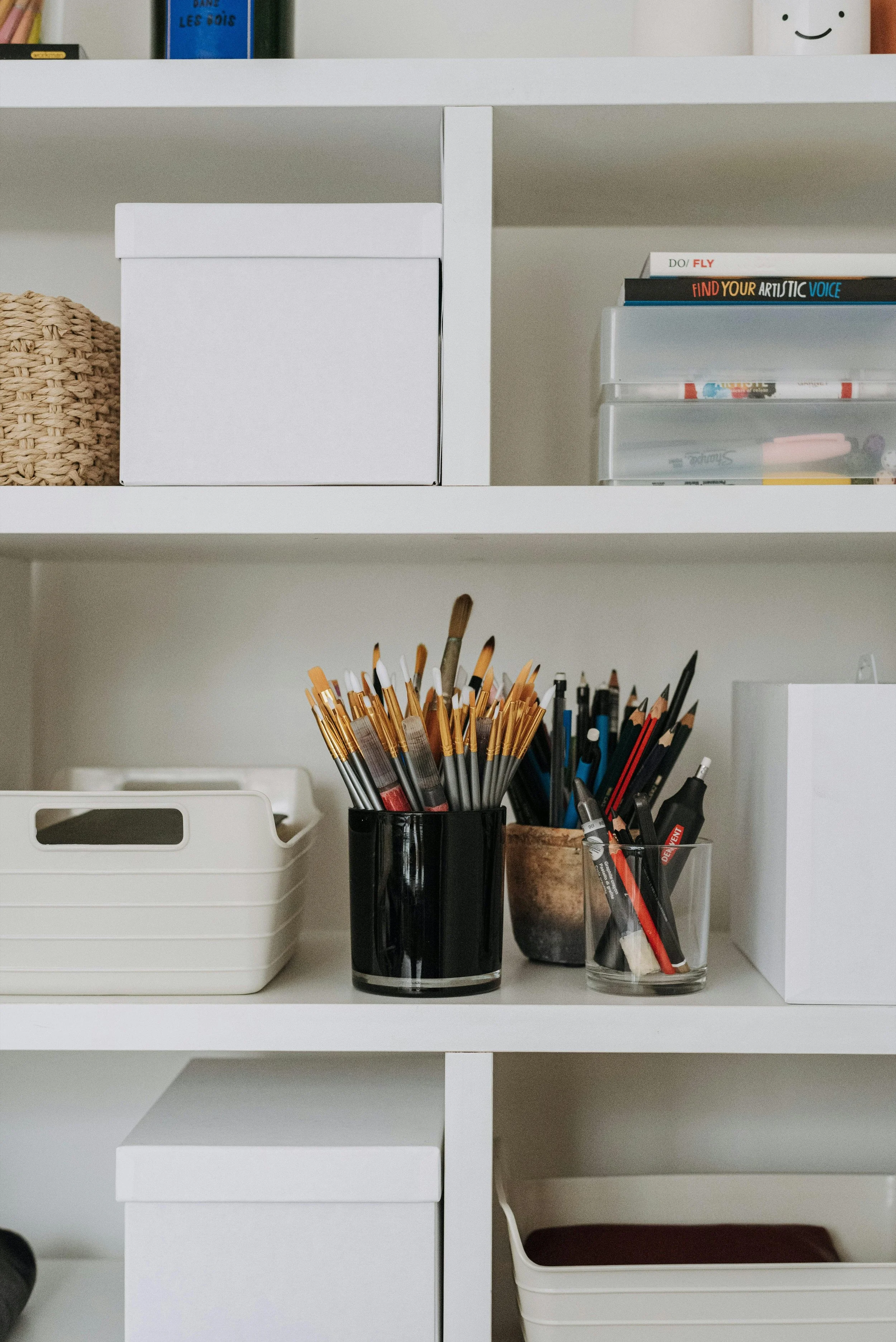
9. Organise by Category, Not by Container
A common mistake in home organisation is buying containers first and then trying to fill them.
Instead, begin with categories.
Group items by function:
Baking supplies
Batteries and tools
Cleaning products
Gift wrap
Seasonal accessories
Once everything is sorted, you can choose the most sustainable containers to suit what you actually own - avoiding overbuying and excess waste.
Want a low-waste organising system that actually fits your home and habits? Explore our home organisation services and we’ll help you build a setup that’s practical and easy to maintain.
10. Invest in Fewer, Better Storage Pieces
Sustainable organisation is rarely about having more.
It’s about having the right things, chosen intentionally.
Before purchasing, ask:
Will this last for years?
Is it recyclable or biodegradable?
Does it truly fit my space and needs?
If you can’t picture where it will live, how you’ll clean it and how you’ll reuse it later, it’s probably not the right piece.
Low-plastic setups tend to cost more upfront, but they often save money (and waste) long-term because they don’t need constant replacing.
11. Label Thoughtfully Without Creating Waste
Labelling is one of the most powerful tools for maintaining an organised home - especially in shared family spaces.
Eco-friendly labelling options include:
Chalkboard labels (reusable)
Wooden tags
Minimal paper labels
Washable marker directly on glass
Aim for labels you can change as categories shift, so you’re not redoing everything when life changes. Avoid disposable sticker packs that peel, fade, and need constant replacement.
12. Rethink Seasonal Storage
Seasonal items are often stored in bulky plastic tubs - but there are better low-waste alternatives.
Try:
Fabric zip bags for bedding
Suitcases you already own
Cotton storage cubes
Under-bed wooden drawers
Vacuum bags used sparingly and repeatedly
These solutions keep your home organised without adding unnecessary plastic clutter.
13. Keep Everyday Storage Visible and Simple
The most sustainable systems are the ones you’ll actually maintain.
Aim for storage that feels effortless:
Open baskets for daily essentials
Clear glass jars for pantry staples
Minimal, breathable storage for clothing
Keep visible storage lightly filled, if it’s packed tight, it stops feeling calm and starts looking like clutter. When you can easily see what you own, you naturally use what you have - and buy less over time.
That’s eco home organisation in practice!
14. Store Items Loose Instead of Over-Packaged
Many cupboards are filled with unnecessary packaging inside.
A low-waste approach means removing excess where possible:
Decant cereals into jars
Store toiletries without boxes
Keep cleaning cloths folded in baskets rather than wrapped in plastic
Not only does this reduce waste, it creates a calmer visual environment - one that feels lighter and easier to manage.
15. Let Organisation Reflect Your Values
Sustainable home organisation is not about being perfect.
It’s about making small choices that add up to something meaningful:
Less waste
Less clutter
More calm
More intention
Systems that support daily life beautifully
Even one plastic-free drawer or one zero waste storage swap is a step toward a more thoughtful home.
Final Thoughts: Sustainable Storage Is a Lifestyle Shift
The most organised homes aren’t filled with endless matching tubs. They’re filled with systems that feel natural, functional, and lasting.
Eco-friendly storage is about choosing sustainable containers, embracing plastic-free storage, and creating low-impact systems that support your life while reducing waste and overwhelm.
Support can make the process feel far lighter, especially when you want to avoid buying storage you do not truly need.
If you’re ready to create a calm, organised home with support, Homefulness would love to help. Explore our services and discover how sustainable organisation can feel effortless, elevated, and deeply restorative.
FAQs
How do I organise sustainably without buying lots of new storage?
Start by decluttering, then reuse what you already own. Only buy storage once you know what categories you’re keeping and what size containers you actually need.
What’s the best eco-friendly storage material for everyday use?
It depends on the space. Glass is ideal for food and pantries, wood and bamboo work well for open shelving, and metal is great for long-term durability.
Are there plastic-free storage bins that work for kids and family homes?
Yes. Woven baskets, wooden crates, and fabric bins made from recycled textiles can be family-friendly, especially when they’re lightweight and easy to carry.
How can I avoid single-use containers without making the kitchen harder to manage?
Focus on repeat-use solutions like jars, stackable glass containers, beeswax wraps, and refillable bottles. Start with the items you reach for daily.
How do I store things in a low-waste way in small spaces?
Use modular pieces you can reuse as needs change, keep categories clear, and avoid buying containers that only work for one specific purpose.
Is “zero waste storage” realistic in a normal household?
For most homes, “lower waste” is the realistic goal. Small changes like reusing jars, buying second-hand storage, and choosing durable materials add up quickly.

Jessica has been part of the Homefulness team since 2019, first as a professional organiser and now leading business development and social media. With a background in merchandising and retail management, she pairs a sharp eye for styling with practical, systems-led organisation, and has helped clients across London and the South East create calmer, clutter-free homes.
Meet the Homefulness team →Found this useful? Add Homefulness as a preferred source on Google.